



Update 2026: Are Vital Farms Eggs Sneaky Stuff?
Recent online discussions have raised concerns about the amount of linoleic acid (LA; an omega-6 fatty acid) in Vital Farms eggs labeled as pasture-raised.
The key questions are whether the presence of LA in Vital Farms eggs makes them unhealthy, and/or if the brand has been lying about the hens’ living conditions.
Some claim that high LA could drive inflammation or metabolic disease in the humans eating these eggs.
We’ve added this addendum to break down what the science actually tells us, as well as increased clarification around egg certifications so you can make an informed decision about whether to be concerned about Vital Farms.
TL;DR
- The recent Vital Farms controversy is not a health or safety issue for consumers.
- The concerns relate to brand transparency, greenwashing, and perhaps exploiting a lack of consumer understanding about what egg certifications actually mean.
- “Pasture-raised” standards regulate outdoor access and stocking density, not the chickens’ diet or the fatty acid composition of their eggs.
- Claims that linoleic acid in eggs causes inflammation or chronic disease overlook a key distinction: the potential risks of polyunsaturated fats (PUFAs) arise primarily from oxidation during high-heat cooking or processing, not from consuming these fats in whole foods like eggs, which are safe and nutritious.
What is the Vital Farms Debate about?
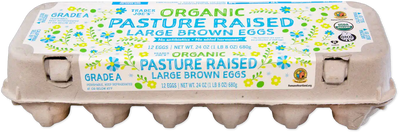
The discussion started following analysis of the fatty acid composition of Vital Farms pasture-raised eggs, which contain linoleic acid levels similar to conventional (caged) eggs.
This led to two main claims circulating online:
- That eggs high in linoleic acid can cause inflammation, metabolic disease, or gut problems.
- That the fatty acid profile suggests chickens may not actually be pasture-raised.
Both claims misunderstand how egg production and nutrition work.
When it comes to commercial-scale production, pasture-raised hens receive supplemental feed. The composition of that feed—along with natural foraging—affects the nutrient profile of the eggs.
Industry-wide, chicken feed has become primarily corn and soy based. Importantly, pasture-raised certification standards focus on animal welfare and outdoor access, not the exact fatty acid profile of eggs.
What is linoleic acid?
Linoleic acid (LA) is an essential omega-6 fatty acid, meaning our bodies must obtain it from food. Current dietary guidance suggests roughly:
- 12 g per day for women
- 17 g per day for men
This represents about 5–10% of daily calories on a typical diet. But just to be clear, deficiency is avoided at intake levels much lower than typical Western consumption.
Eggs provide only a small portion of that intake.
- One whole egg contains about 1.3 g of LA per 100 g.
- Most LA in modern diets comes from vegetable oils, seed oils, processed foods, and cooking fats, not eggs.
Even people who eat convention eggs daily usually get the majority of their omega-6 intake from other foods.
Are polyunsaturated fats (PUFAs) like omega-6 harmful?
Online discussions often frame PUFAS as inherently inflammatory. But the scientific consensus is more nuanced.
When linoleic acid is consumed in whole foods (like eggs, nuts, and seeds) it is:
- naturally occurring
- unoxidized
- present in moderate amounts
- part of a nutrient-rich food matrix that is safe and nutritionally beneficial under these conditions (including when you cook these foods)
Potential problems arise mainly when PUFAs are damaged through extreme heat or processing, such as:
- deep frying
- repeated reheating of oils
- heavily processed foods containing degraded fats
These conditions can create oxidized lipid compounds, which can lead to the inflammation and gut issues noted above. Oxidation drives PUFA-related harms, not the fatty acid itself.
Even without making the distinction between PUFAs from whole foods versus cooking oils, scientific reviews show that intake of linoleic acid does not cause inflammation or chronic disease at levels seen in normal diets.
Buying eggs locally vs. commercial brands
One useful takeaway from this debate is that transparency matters more than any single nutrient measurement. If you have access to a trustworthy local farm, you might consider getting your eggs there.
Potential advantages of local eggs include:
- You can observe animal welfare conditions directly.
- Truly pasture-based diets may modestly improve omega-3 to omega-6 balance.
- Shorter supply chains may support environmental sustainability.
However, local eggs are not automatically perfect. Consider:
- Feed quality still affects egg nutrition (and keep in mind that chicken feed is pretty uniform across the industry, whether you’re a small operation or a commercial farm).
- Environmental contaminants (such as heavy metals in urban soils) can sometimes affect backyard or urban flocks.
For many shoppers, buying directly from farms isn’t practical. In those cases, credible third-party certifications remain the most reliable way to evaluate animal welfare and production standards.
We break down the most meaningful egg certifications in the guide below, which we will get to now!
The Healthiest Brands of Eggs, Ranked
When it comes to figuring out, “which are the healthiest eggs?” it’s really all about the certifications you'll find on the carton.
For this guide, we’ll categorize the certifications rather than the brands themselves. This will be the biggest help as you identify the healthiest eggs available where you live. (If we were to actually rank brands, most of the Best Stuff would come from small, local farms.)
Trying to decipher the myriad different claims when buying a carton of eggs has become almost comical. In fact, several of these labels do provide meaningful information to distinguish between egg quality.
Unfortunately, many certifications overlap or have variable standards– and some are essentially meaningless (Sneaky Stuff)! It’s important to look for specific certifications when trying to determine which are the healthiest eggs.
To start with, here is a breakdown of common Good Stuff certifications, separated according to their relevance to your family’s health, animal welfare, and the environment.
The Healthiest Eggs: Safety First
There are four meaningful certifications to look for when you're prioritizing eggs that will be the safest for the person eating them.
USDA Organic: This is one of the most comprehensive certifications when it comes to the healthiest eggs. Organic eggs come from hens that are fed organic, pesticide-free, non-GMO feed. The hens are raised without synthetic pesticides, herbicides, or antibiotics, and the eggs are free from artificial hormones. The feed and environment must meet strict standards that minimize the risk of chemical or heavy metal contamination. In order to be USDA organic, the hens must also have outdoor access. The quality of that access isn’t strictly defined, so this label does not carry much weight from an animal welfare standpoint. If your primary concern is the health and safety of your family, organic eggs are a solid choice.

Certified Naturally Grown: This third-party certification is similar in scope to USDA Organic but is tailored for smaller, local farms. It prohibits the use of synthetic pesticides, fertilizers, and GMOs in feed and farming practices, which reduces the likelihood of micro-contamination in eggs.

Food Alliance Certified: While less common, this certification focuses on sustainable agricultural practices, including soil and water management, pesticide use, and ensuring clean feed sources. It emphasizes both animal welfare and environmental sustainability, which indirectly helps reduce the risk of contaminants entering the food chain.

Non-GMO: This label refers to the feed given to the hens, ensuring it doesn’t contain genetically modified organisms. While this certification is valuable for those concerned about GMOs, it doesn't address pesticide use, or any other micro-contamination concerns. It's less comprehensive than organic when it comes to overall health and safety. These certifications come from third-party organizations, as the USDA does not currently regulate this label for eggs. Overall, this is the least useful of the "Good" certifications.

The Best Eggs for Chicken Welfare
Several of the certifications in this section don’t impose guidelines around microcontaminants or feed quality. If you you're in search of the healthiest eggs to eat, look for USDA Organic on the label in addition to one or more of these four certifications.
Animal Welfare Approved (AWA): Managed by A Greener World, this is the gold standard for chicken welfare, and one of the most rigorous certifications. AWA-certified eggs come from farms where hens have the most space to roam, forage, and engage in natural behaviors.

Pasture-Raised (Best), Free-Range (Good), or Cage-Free (Okay): These designations get tricky because the USDA and several third-party organizations each have their own version. The Humane Farm Animal Care (HFAC) organization oversees the Certified Humane label, which is the one you’re most likely to encounter. When in doubt, just remember that the third-parties are more stringent than the USDA equivalent in each category.
- Pasture-Raised: The USDA does not regulate this term, so if you see it, you know that it is the highest of the three tiers designated by Certified Humane or another third-party with strict oversight. This label indicates that hens have significant outdoor access (typically at least 108 square feet per bird).
- Cage-Free: USDA Cage-Free certification only ensures that hens aren’t in cages, whereas Certified Humane certified Cage-Free provides more specific welfare requirements, including space requirements and access to enrichments.
- Free-Range: USDA free-range has no specific space or quality requirements for outdoor access. Again, Certified Humane requires more outdoor space and a higher standard for the outdoor environment.

American Humane Certified (AHC): This certification requires specific space allowances and the ability for hens to engage in natural behaviors. There are tiers, similar to Certified Humane, like cage-free, free-range, and pasture-raised, but the outdoor access requirements tend to be more lenient.

Global Animal Partnership (GAP): This multi-tiered certification focuses on animal welfare and provides six levels (Step 1 to Step 5+), with increasing welfare standards as you go higher in the steps. Steps 4 and higher require pasture access, and each level is verified by third-party audits. GAP is known for its transparency and robust animal welfare standards.

The Best Eggs for Environmental Sustainability
If your primary concern is the health of the planet, there are three egg certifications to look for.
- USDA Organic: In addition to being healthier, organic eggs are generally better for the environment. Organic farming practices prohibit the use of synthetic chemicals, reduce soil pollution, and promote biodiversity. For consumers interested in minimizing their environmental footprint, organic eggs are a great choice.
- Animal Welfare Approved: As noted above, AWA-certified eggs come from farms where hens have the most space to roam, forage, and engage in natural behaviors. AWA also has strong environmental protections, making it a top choice for consumers concerned with both hen welfare and environmental sustainability.
- Pasture-Raised: We’ve seen this label above as well, which indicates that hens have significant outdoor access. This also promotes more sustainable farming practices. Well-managed pasture-raised farms often focus on soil health and reduced environmental impact.
Hopefully, this has made it easier to find eggs that you'll feel confident are Good Stuff, based on your personal priorities. Now let’s talk about the Sneaky and flat out Bad Stuff when it comes to egg certifications.
Hormone-Free (meaningless): Hormones are not allowed in egg production in the U.S., so this label is redundant. The USDA requires egg producers to state "no hormones used" on cartons, but this applies to all eggs.

Antibiotic-Free (meaningless, and therefore Sneaky): This USDA regulation means that the hens were not treated with antibiotics during their lifetime. It's Sneaky because hens being treated with antibiotics are pulled from egg-production! Moreover, unlike meat and dairy products, antibiotics are very unlikely to enter eggs, due to the way antibiotics are metabolized and how eggs are formed. Antibiotic concerns pertain to the hens, not the egg.

Farm-Raised (Sneaky Stuff): This term has no regulatory definition. Essentially all commercial eggs come from a farm, so the label "farm-raised" is a marketing term. It does not provide any information about the conditions in which the hens were raised.

United Egg Producers (Bad Stuff): A certification developed by the egg industry itself, UEP is the bottom of the barrel when it comes to both animal welfare and the environment. The UEP has no regulations around feed-quality, antibiotic usage, etc. Worse, the majority of UEP-certified eggs come from hens in cages, where the UEP recommends a minimum of 67-86 square inches per bird (roughly the size of a sheet of paper). Beak trimming is allowable under UEP guidelines, for those aware of this concerning practice.



1 comment
Diana
Thanks so much for this helpful information!