How to Choose the Safest Baby Bottles
1. Why Plastic Baby Bottles Are a Problem
Plastic baby bottles — including BPA-free options — can leach chemical plasticizers into milk and formula, particularly when heated. BPA was widely used in polycarbonate bottles until consumer pressure led to its removal, but replacement chemicals like BPS and BPF have similar estrogenic activity in early research. Microplastics are another concern: a 2020 study in Nature Food found that plastic baby bottles release millions of microplastic particles per liter during formula preparation. For an infant consuming multiple bottles per day, the cumulative exposure is significant.
2. Glass vs. Stainless Steel Baby Bottles
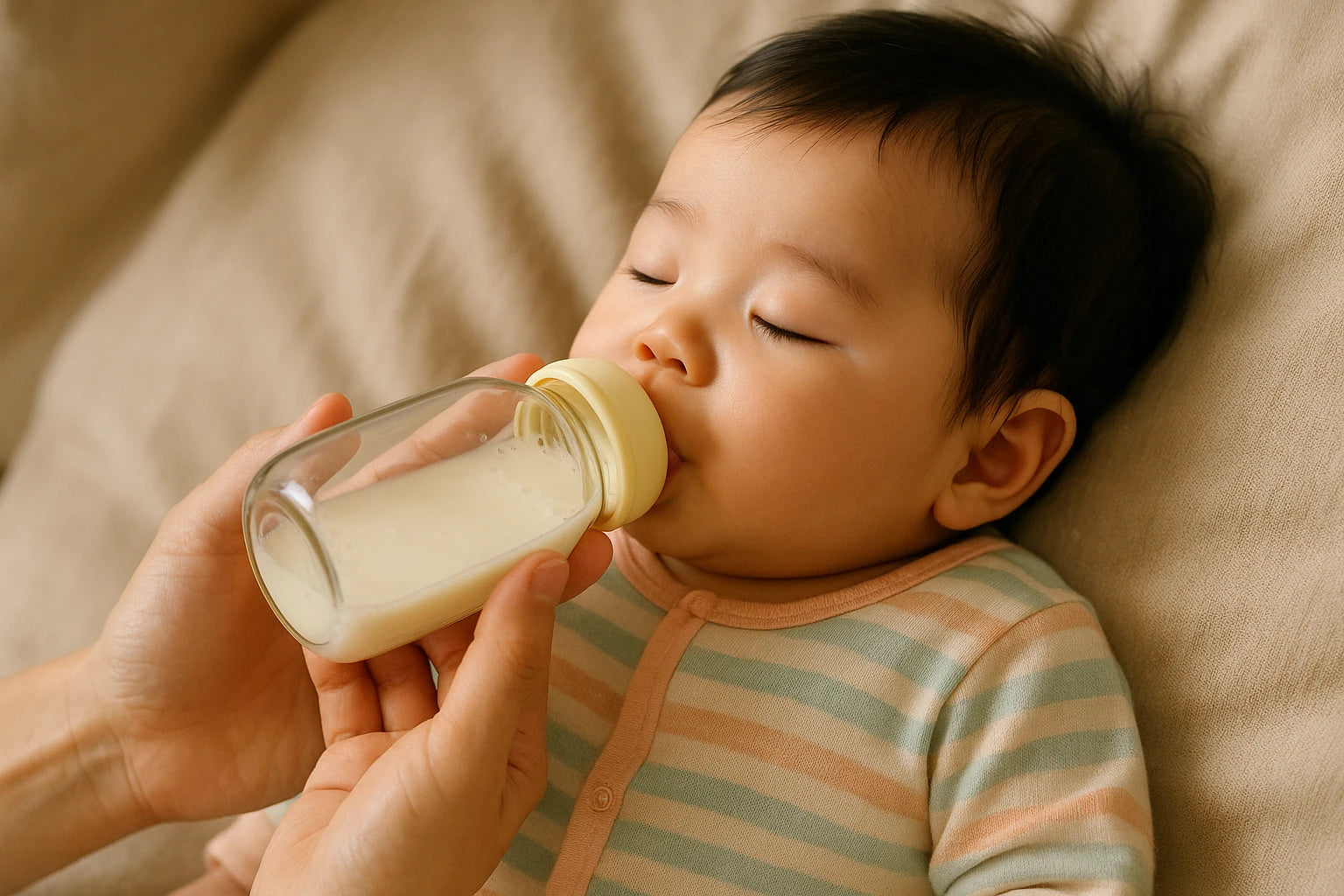
Both glass and stainless steel are excellent, non-leaching choices. Glass (specifically borosilicate glass) is chemically inert, easy to clean, and lets you see the fill level — but it’s heavier and can break if dropped. Many glass bottles come with protective silicone sleeves. Stainless steel is lighter, virtually unbreakable, and excellent for on-the-go use — the tradeoff is that you can’t see the fill level. For home use with newborns, glass is often preferred. For toddlers and travel, stainless steel is more practical. Both are far safer than any plastic option.
3. What About Anti-Colic Bottles?
Many anti-colic bottles use complex venting systems with multiple small plastic parts — which can be harder to clean thoroughly and may add more plastic contact surfaces. If colic or gas is a concern, look for glass or stainless bottles with vented silicone nipples that minimize air intake without adding plastic components. Paced bottle feeding technique also significantly reduces gas and supports breastfeeding continuation.
Read our full Best Non-Toxic Baby Bottles Guide for brand-by-brand ratings, our top picks by feeding style, and guidance on transitioning to sippy cups.