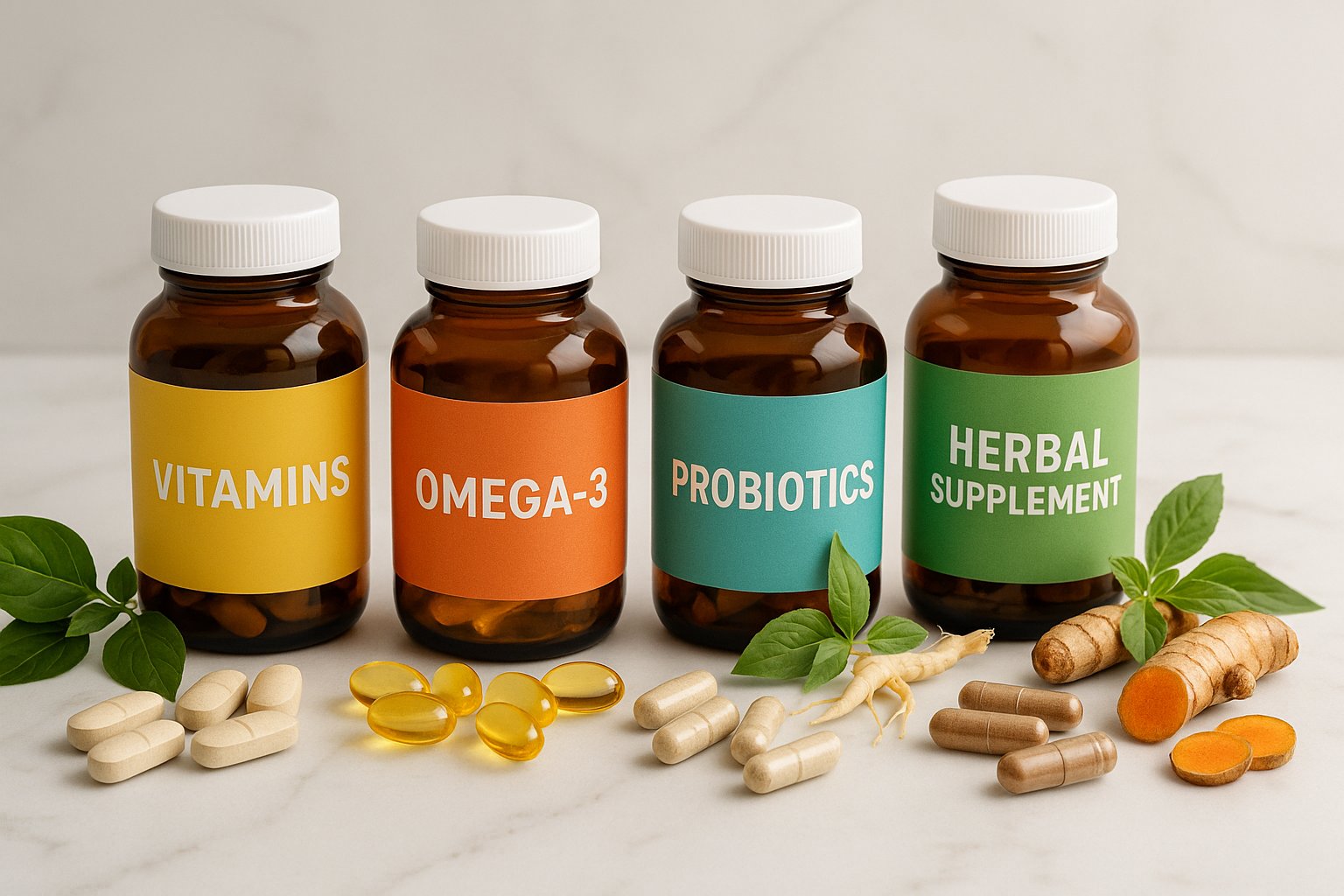
How to Choose Clean Supplements
1. What to Avoid in Supplements
The supplement industry is largely unregulated, which means fillers, synthetic dyes, and unnecessary additives are common even in well-known brands. Watch out for magnesium stearate and silicon dioxide (common flow agents with questionable necessity), titanium dioxide (a synthetic whitener linked to gut inflammation), artificial colors like FD&C Red 40 or Blue 2, and proprietary blends — which list ingredients without disclosing individual doses, making it impossible to evaluate effectiveness or safety.
2. How to Read a Supplement Label
The “Supplements Facts” panel shows active ingredients and doses. The “Other Ingredients” list is where fillers, binders, and additives hide — the shorter this list, the better. Look for recognizable, minimal inactive ingredients like cellulose (vegetable capsule), rice flour, or ascorbic acid. If you see a long list of chemical-sounding names, that’s a red flag. Also check that doses align with research-backed effective amounts, not token quantities added for label appeal.
3. Third-Party Certifications That Matter
Because the FDA doesn’t approve supplements before they go to market, third-party testing is the most reliable quality signal. USP Verified confirms the product contains what the label says at the stated dose. NSF Certified for Sport adds testing for banned substances. Informed Sport is the gold standard for athletes. These certifications don’t guarantee a supplement works, but they do confirm it’s accurately labeled and free from contaminants.
Want deeper guidance by supplement type? Browse all of our supplement guides for ingredient-by-ingredient breakdowns and brand recommendations.