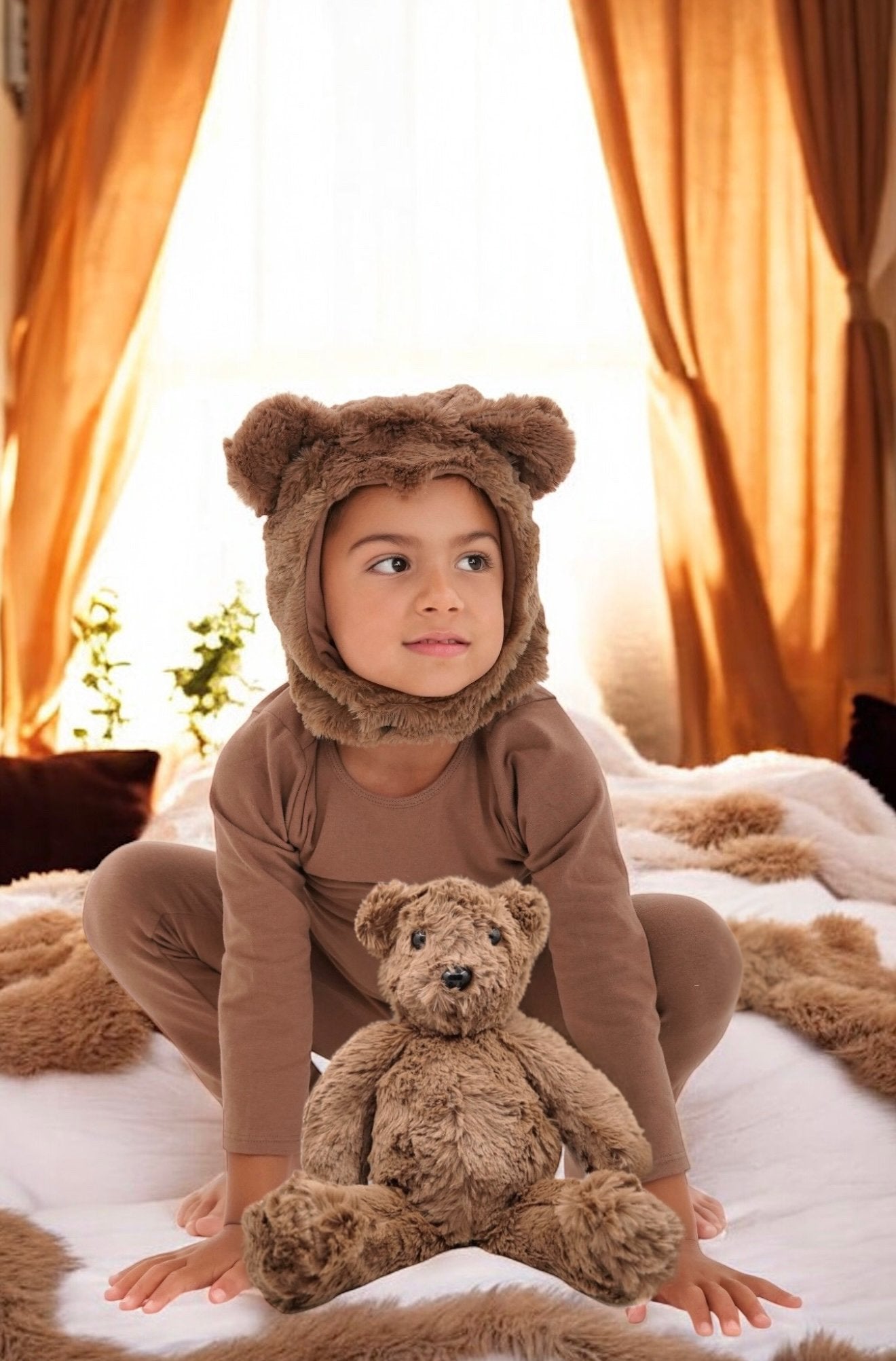
Child wearing a non-toxic bear costume with eco-friendly materials, holding a teddy bear.

Costumes

Most kids' costumes are loaded with synthetic fabrics, chemical dyes, and flame retardant treatments. Ours aren't. Every costume here is made from natural, skin-safe materials so your kids can play freely — no toxic trade-offs.

What to Look for in a Non-Toxic Kids' Costume

Most Halloween costumes are made from polyester — a petroleum-based synthetic that can off-gas chemicals and irritate sensitive skin. Look for costumes made from 100% cotton or other natural fibers instead.

Watch out for chemical flame retardants. Many synthetic costumes are treated with these to meet flammability standards — but the chemicals themselves are linked to hormone disruption and developmental issues in kids. Natural fiber costumes are inherently less flammable and don't require the same chemical treatments.

Also check for non-toxic dyes. Bright synthetic colors often come from azo dyes, which can release carcinogenic compounds. Look for GOTS-certified or naturally dyed options when possible.

Every costume in this collection meets these standards — so your kids can focus on the fun, not the chemicals.

We only carry costumes made from natural fibers like cotton, colored with non-toxic dyes, and free from chemical flame retardant treatments. We look for brands that are transparent about their materials and manufacturing.

Costumes FAQ

  • Many conventional Halloween costumes are made from synthetic fabrics like polyester and nylon that are treated with flame retardants, dyes, and finishing chemicals. Some have tested positive for phthalates, lead, and other harmful substances — especially concerning for young children who may put costumes in their mouths or wear them against sensitive skin for hours. The safest costumes are made from natural, undyed, or low-impact dyed fabrics like organic cotton, and are free from added chemical treatments.

  • Look for costumes made from natural fibers like organic cotton, wool, or linen rather than synthetic fabrics. Avoid costumes with strong chemical smells straight out of the packaging — that odor is often off-gassing from dyes or finishing treatments. Certifications like GOTS (Global Organic Textile Standard) or OEKO-TEX are good signals that a fabric has been tested for harmful substances. Also skip face paints and makeup that contain synthetic fragrance, parabens, or heavy metals — opt for USDA-certified organic or EWG-verified face paint instead.

  • Not all face paint is safe for kids. Many conventional face paints contain synthetic dyes, parabens, formaldehyde-releasing preservatives, and even trace heavy metals like lead or nickel. Since face paint is applied directly to skin — often near the eyes and mouth — ingredient safety matters a lot. Look for face paints that are EWG Verified, USDA-certified organic, or made with food-grade or mineral-based pigments. Always do a patch test first, especially for kids with sensitive skin or eczema.

  • Polyester is a petroleum-derived synthetic fabric that's common in Halloween costumes because it's cheap and easy to shape into elaborate designs. The concern isn't polyester itself so much as the dyes, flame retardants, and finishing chemicals often applied to it — some of which have been linked to skin irritation, hormone disruption, and other health concerns. For a costume worn just one night, the risk is relatively low for most kids. But for children with sensitive skin, allergies, or eczema, or if you prefer to minimize chemical exposure, a natural fiber costume is a much better choice.

  • OEKO-TEX Standard 100 is an independent certification that tests textiles for over 100 harmful substances, including pesticides, heavy metals, formaldehyde, and certain dyes. A fabric with OEKO-TEX certification has been verified to be free from these substances at levels that could be harmful to human health. For Halloween costumes — especially those worn by young children with sensitive skin — OEKO-TEX is one of the best signals that a fabric is genuinely safer. It doesn't mean the fabric is organic, but it does mean it's been tested and cleared for skin contact.

  • Most Halloween costumes sold on Amazon are made by third-party manufacturers with little ingredient transparency, and the vast majority are made from synthetic fabrics with synthetic dyes and chemical treatments. Some have been independently tested and found to contain phthalates, lead, and other harmful substances above safe thresholds. That doesn't mean every Amazon costume is dangerous, but it does mean you're largely buying blind. If you're shopping for a child, we'd recommend sticking to brands that disclose their materials, hold OEKO-TEX or GOTS certification, and have a track record of ingredient transparency — all of which you'll find in our curated collection.