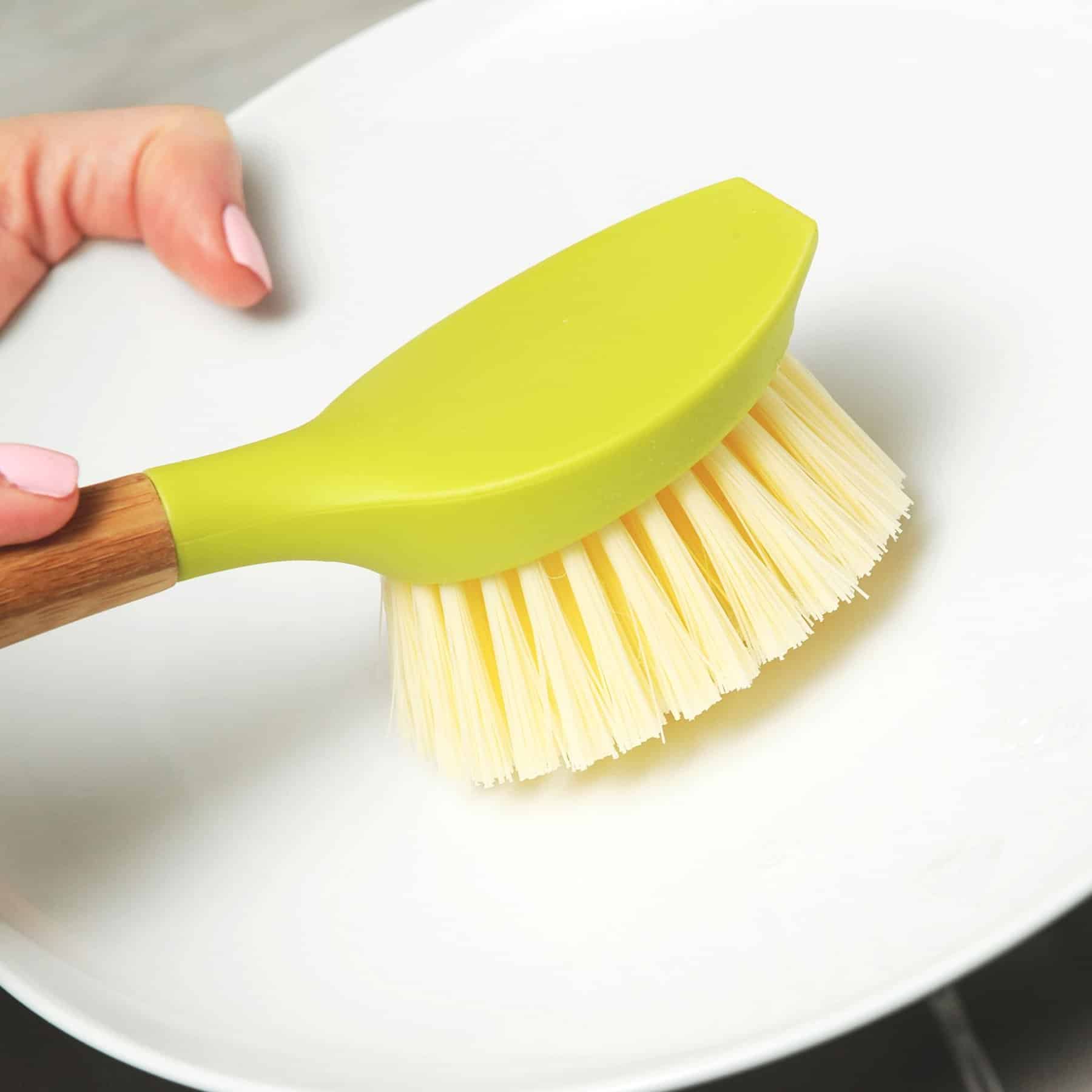
Eco-friendly dishwashing brush cleaning a white plate.

Dishwashing

Conventional dish soaps and dishwasher detergents contain synthetic fragrance, sodium lauryl sulfate (SLS), methylisothiazolinone (MIT), bleach, and phosphates that leave residue on dishes and get rinsed down the drain into waterways. Everything here is chosen for formulations that are genuinely effective, fully disclosed, and free from the chemicals you don’t want on the surfaces your family eats from.

How to Choose Non-Toxic Dish Soap & Dishwasher Detergent

1. What to Avoid in Conventional Dish Soap

The biggest concerns in conventional dish soaps are synthetic fragrance (which contains phthalates and other undisclosed chemicals), SLS and SLES (harsh surfactants that can be skin irritants and are often contaminated with 1,4-dioxane), and preservatives like methylisothiazolinone (MIT) — a potent skin sensitizer and neurotoxin at higher concentrations that is banned in leave-on products in the EU but still found in many rinse-off dish soaps. Dish soap residue doesn’t fully rinse from all surfaces, particularly plastic containers and cutting boards, making ingredient quality more important than it might seem.

2. Dishwasher Detergent: Tablets vs. Powder vs. Liquid

Dishwasher detergents often contain chlorine bleach, synthetic fragrance, phosphates, and optical brighteners. Tablets are convenient but often contain more additives than powder. Fragrance-free powder detergents with simple formulations tend to be the cleanest option and easiest to verify. Concentrated tablets from clean brands — with fully disclosed ingredients and no synthetic fragrance or bleach — are the best of both worlds for convenience and safety. Rinse aid is a separate consideration: conventional rinse aids contain synthetic surfactants; white vinegar in the rinse aid compartment is an effective, chemical-free alternative.

3. Does Natural Dish Soap Actually Clean as Well?

Yes — plant-derived surfactants like decyl glucoside and coco glucoside effectively cut grease and lift food particles. The difference is that they’re derived from coconut or corn rather than petroleum, and they biodegrade cleanly without the toxic breakdown products of some synthetic surfactants. Some natural dish soaps require slightly more product for heavy grease — using warm water and soaking heavily soiled items briefly addresses this entirely. For dishwashers, the main adjustment is ensuring water temperature is adequate (120°F+), which is where most cleaning power comes from regardless of detergent.

Read our full Best Natural Dish Soap Guide for brand-by-brand ratings and our top picks for hand washing and dishwasher use.

We avoid synthetic fragrance, SLS/SLES, methylisothiazolinone and methylchloroisothiazolinone (MIT/CMIT), phosphates, bleach, triclosan, and optical brighteners. We look for plant-derived surfactants, full ingredient disclosure, EWG Verified status or equivalent, biodegradable formulas, and low-waste packaging — tablets, concentrates, and refillable options where available. Effectiveness on grease and food residue is tested, not assumed.

Dishwashing FAQs

  • The key ingredients to avoid in dish soap are synthetic fragrance (contains phthalates and hundreds of undisclosed chemicals), sodium lauryl sulfate or sodium laureth sulfate (SLS/SLES — harsh surfactants often contaminated with 1,4-dioxane), methylisothiazolinone and methylchloroisothiazolinone (MIT/CMIT — preservatives that are potent skin sensitizers and neurotoxins, banned in leave-on products in the EU), triclosan (an antibacterial agent and endocrine disruptor), and bleach in everyday formulas. A clean dish soap should have a short, fully disclosed ingredient list with plant-derived surfactants, no synthetic fragrance, and no MIT/CMIT.

  • Dawn is not a non-toxic dish soap. It contains synthetic fragrance, methylisothiazolinone (MIT) — a preservative that is a potent skin sensitizer banned in leave-on products in the EU — and synthetic surfactants including sodium lauryl sulfate. Dawn is effective at cutting grease because of these strong synthetic ingredients, but that effectiveness comes at a cost. The "free & clear" version removes fragrance and some dyes but still contains MIT and synthetic surfactants. For a dish soap that cleans effectively without these ingredients, plant-derived alternatives with fully disclosed formulas are significantly better choices.

  • The best non-toxic dishwasher detergents use plant-derived surfactants, skip chlorine bleach and synthetic fragrance, and disclose their full ingredient list. Look for fragrance-free formulas — dishwasher steam carries fragrance chemicals throughout your kitchen and directly onto dishes. Powder detergents tend to have shorter, cleaner ingredient lists than pods or tablets, which often include binders, coatings, and more additives. Tablet formats from clean brands with fully disclosed ingredients offer the best of both worlds. EWG Verified dishwasher detergents are a reliable filter. Always pair with a non-toxic rinse aid — or use white vinegar in the rinse aid compartment as a chemical-free alternative.

  • Yes — plant-derived surfactants like coco glucoside, decyl glucoside, and sodium coco sulfate effectively cut grease and lift food residue. They work by the same physical mechanism as synthetic surfactants — reducing surface tension and emulsifying oils — just derived from plant sources rather than petroleum. For heavily soiled pans, soaking in warm water for a few minutes before washing makes a significant difference regardless of which dish soap you use. The main practical adjustment when switching to natural dish soap is using warm or hot water, which is where most of the cleaning power actually comes from anyway.

  • Truly Free is a clean household cleaning brand known for its fragrance-free, concentrated formulas with plant-derived ingredients. They market themselves as free from synthetic fragrance, dyes, MIT, SLS, and other common concerns — and their ingredient transparency is stronger than most mainstream brands. Their subscription refill model also reduces plastic waste. Please verify our current assessment of Truly Free against our Best Natural Dish Soap Guide, which includes our most up-to-date rating and ingredient review.

  • White vinegar is the simplest non-toxic rinse aid alternative — fill your dishwasher’s rinse aid compartment with plain white distilled vinegar. It helps prevent water spots and aids drying without any synthetic surfactants or fragrance. It won’t damage your dishwasher and works well in most cases, though it may be less effective in very hard water areas. For hard water, a small amount of citric acid powder added to the wash can help. If you prefer a commercial option, look for rinse aids with fully disclosed plant-derived ingredients and no synthetic fragrance — several clean brands now offer these. Conventional rinse aids like Finish contain synthetic surfactants and fragrance that deposit residue directly onto dishes.

Popular Blog posts

View all