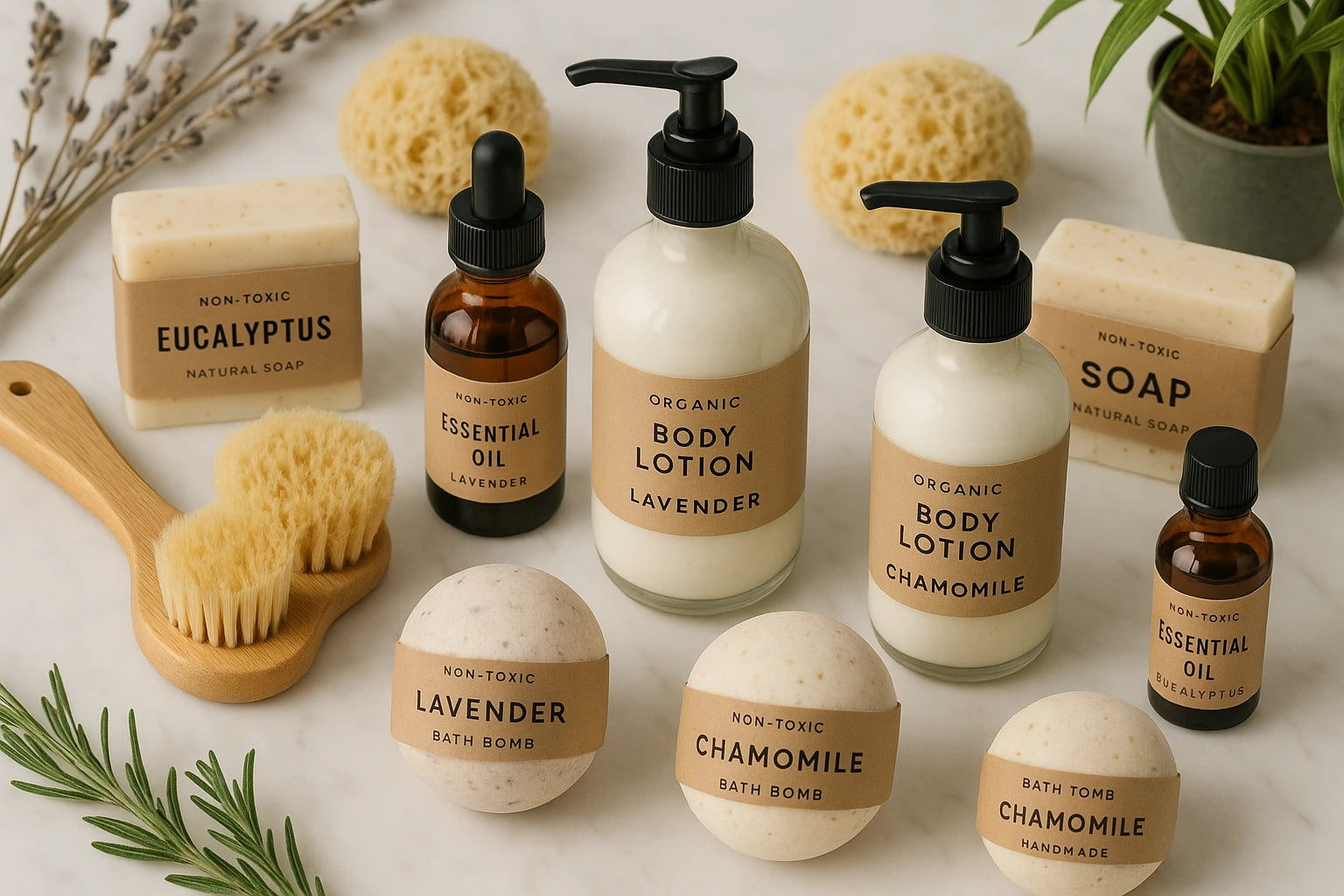
Shop bath and body essentials vetted for ingredients, from soaps and lotions to deodorants and everyday personal care.
Bath & Body FAQs
The most important ingredients to avoid across bath and body products are synthetic fragrance (an undisclosed mixture of chemicals including phthalates and potential allergens), parabens (preservatives linked to hormone disruption), phthalates (plasticizers used in fragrance and packaging coatings), PEGs and their derivatives (petroleum-derived compounds that can be contaminated with carcinogens), sodium lauryl sulfate at high concentrations (a harsh surfactant that strips skin barrier), formaldehyde-releasing preservatives like DMDM hydantoin and quaternium-15, and aluminum compounds in antiperspirants. For products used on the whole body daily — soaps, lotions, body wash — cumulative exposure matters. A clean product in each category adds up to meaningfully lower total chemical load.
Generally yes — the most common triggers for sensitive skin reactions in bath and body products are synthetic fragrance, harsh surfactants, and chemical preservatives, all of which are used at lower levels or avoided entirely in clean formulations. That said, "natural" is not a regulated term and doesn't guarantee gentleness — some natural ingredients like essential oils and botanical extracts can also be irritating for highly sensitive skin. For truly sensitive or reactive skin, the most reliable approach is fragrance-free (not just unscented), minimal ingredient lists, and products that have been dermatologist-tested or independently certified for sensitive skin. Patch testing new products before full use is always a good practice regardless of how clean the formulation is.
Fragrance-free means no fragrance compounds of any kind have been added to the product — neither synthetic nor natural. This is different from "unscented," which means the product has no detectable smell but may contain masking fragrances to neutralize the odor of other ingredients. For sensitive skin and those avoiding chemical fragrance exposure, fragrance-free is the more meaningful label. In the US, fragrance ingredients don’t have to be individually disclosed on labels — they can all appear as just "fragrance" or "parfum" — which is why fragrance is one of the most opaque and potentially problematic ingredients in personal care. True fragrance-free products list no fragrance, parfum, or individual fragrance compounds in their ingredient list.
Clean, natural personal care products are generally safer for kids than conventional alternatives — particularly because children have higher skin absorption rates and lower body weight, making chemical exposure more impactful pound-for-pound than in adults. The key is choosing products specifically formulated and tested for children’s age ranges, fragrance-free, and free from the most concerning ingredients: synthetic fragrance, parabens, MIT, propylene glycol, and harsh surfactants. "Natural" alone isn’t sufficient — some natural essential oils can be irritating or even harmful for young children (peppermint and eucalyptus, for example, are not recommended for children under 2). Look for products that explicitly state they’re safe for children and have been tested for that use case.
"Natural" refers to ingredient origin — plant-derived, mineral-based, or otherwise from natural sources rather than synthetically produced. "Non-toxic" refers to safety — the absence of ingredients with known or suspected harmful effects. These aren’t the same thing: some natural ingredients (like certain botanical extracts and essential oils) can be irritating or harmful, and some synthetic ingredients are well-studied and safe. The most useful standard is a combination: products with natural origins where possible, rigorously screened for safety, and free from the synthetic ingredients with the strongest evidence of harm. That’s how we vet everything in this collection — ingredient origin and safety evidence together, not just one label claim.
Start with the products you use most frequently and that cover the most skin surface area — body wash, lotion, and deodorant are the highest-impact swaps because they’re used daily on large areas. Soap and shampoo are next. Switching everything at once isn’t necessary — replace products as they run out, prioritizing daily-use items first. Look for fragrance-free options if you have sensitive skin or are switching for health reasons, since fragrance is the most common source of concerning chemicals in personal care. Read ingredient lists rather than relying on label claims like "natural" or "clean," which aren’t regulated. Apps like EWG’s Skin Deep database can help you quickly assess products you’re considering. Over 2–3 product cycles, you’ll have meaningfully reduced your total daily chemical exposure without having to overhaul everything at once.