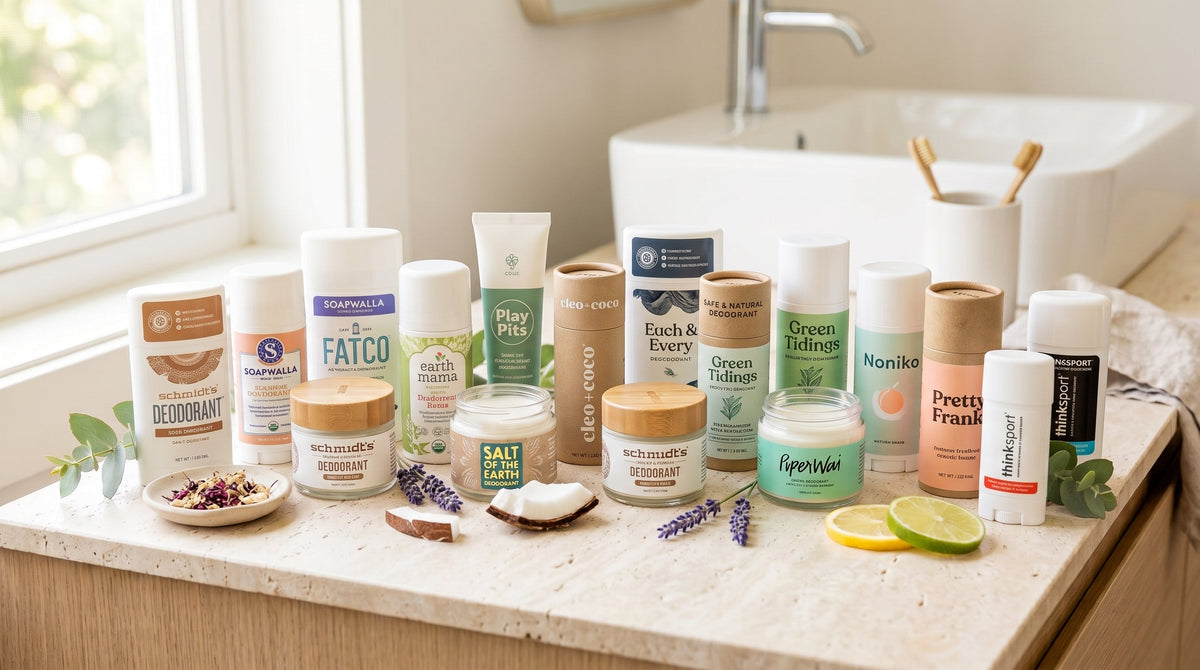
a collection of non toxic and natural perfume products on a white tablecloth.

Natural Perfume

Conventional fragrance is one of the most opaque categories in consumer products. A single “fragrance” or “parfum” listing on a perfume label can represent dozens or hundreds of undisclosed synthetic chemicals — including phthalates used as scent fixatives, benzene derivatives, musks that accumulate in body fat and breast milk, and VOCs that contribute to indoor air pollution. These ingredients are exempt from full disclosure under U.S. law, making fragrance the easiest place to hide a product’s most problematic components. Natural perfumes are made from botanical ingredients — essential oils, plant extracts, and naturally derived aromatic compounds — with full ingredient transparency. Every perfume in this collection discloses its full formula and contains no synthetic fragrance chemicals.

How to Choose a Non-Toxic Natural Perfume

Fragrance is the most legally protected secret in consumer products. Here’s what’s actually in conventional perfume — and what to look for instead:

What ‘Fragrance’ on a Label Actually Means

In the U.S., the FDA requires cosmetic ingredients to be listed on labels — with one significant exception: fragrance. Under the Fair Packaging and Labeling Act, manufacturers can list all fragrance ingredients collectively as “fragrance” or “parfum” without disclosing individual components, claiming trade secret protection. This single exemption covers what is often the most chemically complex part of a product. The Environmental Working Group has found that a single fragrance listing can represent anywhere from a handful to over 100 distinct chemical compounds. The International Fragrance Association (IFRA) maintains a list of restricted and prohibited fragrance ingredients, but compliance is voluntary and self-reported. For a product category applied directly to skin and inhaled throughout the day, this level of opacity is a meaningful problem.

Phthalates: The Hidden Fragrance Fixative

Diethyl phthalate (DEP) is one of the most common ingredients in conventional fragrance, used as a fixative to extend scent longevity and help it adhere to skin. Phthalates are endocrine disruptors — they interfere with hormone signaling, particularly androgens, and have been associated with reproductive toxicity, reduced sperm quality in males, and developmental effects in children exposed in utero. DEP is absorbed through skin and detectable in urine within hours of fragrance application. It is not required to be listed on perfume labels. Studies testing name-brand perfumes have found phthalates in the majority of products tested. Natural perfumes use plant-based fixatives — resins like benzoin and labdanum, musks derived from plant sources, and alcohol — to achieve longevity without phthalates.

Synthetic Musks: Persistent and Bioaccumulative

Musks give perfumes their deep, lasting base notes and are among the most commonly used fragrance ingredients. Synthetic musks — particularly nitro musks (now largely phased out) and polycyclic musks (still widely used) — are persistent organic pollutants that accumulate in human tissue. Polycyclic musks like galaxolide and tonalide have been found in human blood, breast milk, and adipose tissue in multiple biomonitoring studies, and have demonstrated estrogenic activity in laboratory settings. Natural alternatives include plant-derived musks like ambrette seed and animal-free botanical base notes.

Natural vs. Clean vs. Non-Toxic: What the Terms Mean

“Natural,” “clean,” and “non-toxic” are unregulated terms in the fragrance industry — any brand can use them without substantiation. “Natural fragrance” on an ingredient label is particularly tricky: it can include synthetic fragrance ingredients derived from natural sources through chemical processing, or describe undisclosed natural ingredient blends that still aren’t fully transparent. The only meaningful standard is full ingredient disclosure down to individual botanical components. A genuinely natural perfume lists every ingredient — the carrier (typically alcohol or jojoba), each essential oil or botanical extract, and any fixatives or preservatives — individually on the label or website. If a “natural” perfume lists “natural fragrance” as an ingredient without further disclosure, it does not meet our standard.

How We Vet

We screen perfumes and fragrances for: no synthetic fragrance or parfum (any undisclosed fragrance blend is disqualifying), no phthalates (diethyl phthalate is common in conventional fragrance as a fixative), no synthetic musks (nitro musks and polycyclic musks are persistent, bioaccumulative, and found in human tissue), no benzene derivatives used as aromatic compounds, full ingredient disclosure down to individual botanical components, and natural or naturally-derived fixatives only. We also evaluate the brand’s sourcing transparency — natural fragrance is only as clean as the agricultural and extraction practices behind it. Organic certification or wild-harvested sourcing for key botanical ingredients is a strong positive signal.

Natural Perfume FAQs

  • A truly natural perfume is made exclusively from botanical ingredients — essential oils, plant extracts, resins, and naturally derived aromatic compounds — with full ingredient disclosure. The most important marker: every ingredient is listed individually on the label or brand website, with no “fragrance,” “parfum,” or “natural fragrance” catch-all that hides the actual formula. “Natural fragrance” is a particularly misleading label term — it can describe a proprietary blend of botanical ingredients that still isn’t fully disclosed, or it can include synthetic aromatic compounds derived from natural sources through heavy chemical processing. Neither meets our standard for transparency. Genuine natural perfumes also use natural fixatives — resins like benzoin, labdanum, and ambrette seed — rather than synthetic musks or phthalates to extend longevity. The carrier is typically organic alcohol or jojoba oil. Certifications to look for: ECOCERT or COSMOS certification, which have defined standards for natural and organic cosmetics including fragrance; Leaping Bunny for cruelty-free sourcing; and organic certification for key botanical ingredients where applicable.

  • Natural perfumes do typically have shorter longevity than conventional perfumes — and there’s an honest reason for that. Conventional perfumes achieve their long-lasting character primarily through synthetic musks and fixatives like diethyl phthalate, which are persistent compounds that cling to skin and fabric for hours or days. These are also the ingredients with the most significant health and environmental concerns. Without them, natural perfumes rely on resinous base notes (benzoin, labdanum, vetiver, sandalwood), natural waxes, and high essential oil concentrations to extend wear. A well-formulated natural perfume can last 4–6 hours on skin and longer on fabric — not quite the 8–12 hours of a conventional eau de parfum, but meaningful wear for most situations. Techniques to extend longevity: apply to pulse points (wrists, neck, inner elbow) on moisturized skin; layer with an unscented natural lotion first to give the scent something to bind to; or apply to hair, which holds scent longer than skin. Solid perfumes and oil-based formats tend to last longer on skin than alcohol-based sprays in the natural perfume category.

  • Natural perfume is generally much better tolerated by sensitive skin than conventional fragrance — but it’s not automatically hypoallergenic. The most common causes of fragrance sensitivity in conventional perfumes are synthetic musks, phthalates, and synthetic aromatic compounds like linalool and citronellol in their synthetic forms. Natural perfumes eliminate these. However, some people with genuine botanical allergies or sensitivities can still react to high concentrations of essential oils — citrus oils, ylang ylang, jasmine, and certain tree resins are among the more common botanical sensitizers. If you have known skin sensitivities, look for natural perfumes with shorter, simpler ingredient lists, and avoid high concentrations of known sensitizers. Patch testing is always worthwhile before wearing a new perfume: apply a small amount to the inner wrist or elbow and wait 24 hours. Oil-based and solid natural perfumes tend to be better tolerated than alcohol-based sprays for sensitive skin, as alcohol can be drying and irritating on reactive skin. If you’re fragrance-sensitive rather than chemically sensitive — meaning scent itself triggers headaches or reactions regardless of source — even natural perfumes may not be a good fit.

  • Phthalates are a class of plasticizing chemicals widely used in consumer products — and in fragrance, diethyl phthalate (DEP) is used as a fixative to make scent last longer and adhere to skin. The problem: phthalates are endocrine disruptors that interfere with hormone signaling, particularly androgens. Research has linked phthalate exposure to reduced sperm quality and testosterone levels in men, altered reproductive development in male fetuses when mothers are exposed during pregnancy, early puberty in girls, and thyroid disruption. DEP is readily absorbed through skin and is detectable in urine within hours of fragrance application — and because it’s classified as a fragrance ingredient, it doesn’t have to be listed on perfume labels under U.S. law. Multiple independent studies testing name-brand perfumes have found phthalates in the majority of products tested, even those marketed as “fresh” or “light.” For daily-use products applied directly to skin, cumulative phthalate exposure from fragrance is a meaningful concern. Natural perfumes use plant-based fixatives — benzoin resin, labdanum, ambrette seed, vetiver — to extend longevity without phthalates.

  • Natural perfumes are more sensitive to degradation than conventional perfumes because they lack synthetic stabilizers and preservatives. The three enemies of natural fragrance are heat, light, and oxygen — all of which accelerate oxidation of the botanical aromatic compounds and change the scent profile over time. Store natural perfumes in a cool, dark location — a drawer, cabinet, or closet shelf is ideal. Avoid the bathroom, where temperature and humidity fluctuate with showers, and avoid windowsills or countertops with sun exposure. Keep bottles tightly capped between uses to minimize oxidation. Alcohol-based natural perfumes are more stable and typically last 2–3 years when stored properly. Oil-based natural perfumes have a shorter shelf life of 1–2 years and are more sensitive to rancidity from the carrier oil — jojoba is the most stable carrier oil for natural perfume and extends shelf life significantly compared to sweeter carrier oils like almond or coconut. Solid perfumes in wax bases are also relatively stable but should be kept away from heat to prevent melting. If a natural perfume smells noticeably different from when you first opened it — sharper, more acidic, or flat — the aromatic compounds have likely oxidized and it’s time to replace it.