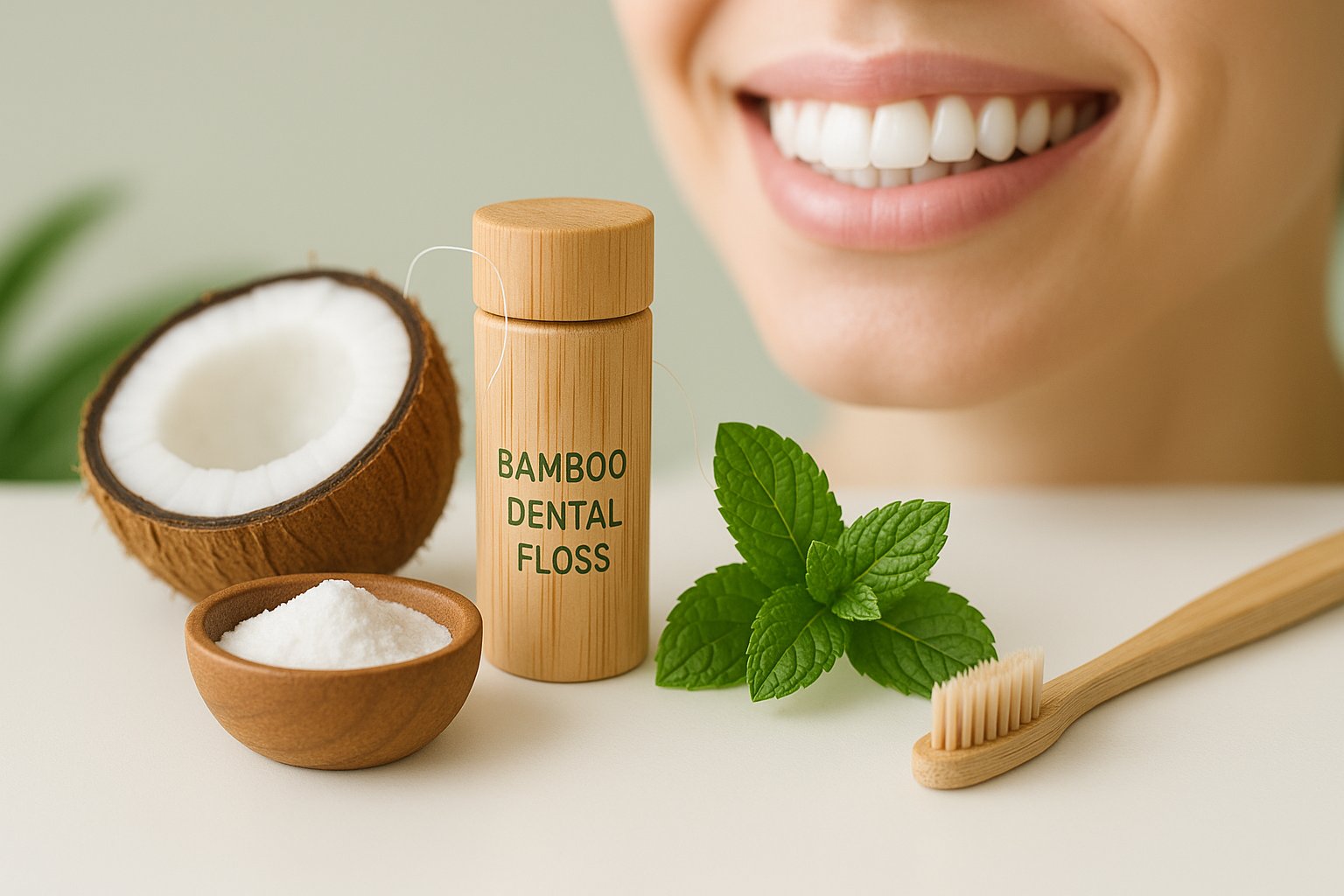
Eco-friendly bamboo dental floss container with coconut and mint leaves beside a smiling person, promoting sustainable oral care.

Dental Floss

Shop dental floss options selected for their materials and coatings, including PFAS-free choices.

How We Vet

We require all dental floss in this collection to be free from PTFE and PFAS coatings, synthetic petroleum-derived waxes, artificial flavors, and plastic-based fiber materials where alternatives exist. We look for floss made from natural silk, organic cotton, or plant-based fibers, coated with natural waxes (beeswax, candelilla wax, or organic coconut oil) and flavored only with natural essential oils like peppermint. Packaging sustainability — refillable glass jars, compostable packaging, or plastic-free options — is a factor we consider alongside ingredient safety.

Dental Floss FAQs

  • Yes — many conventional dental flosses, including popular brands like Oral-B Glide, are coated with PTFE (polytetrafluoroethylene, also known as Teflon), which belongs to the PFAS (per- and polyfluoroalkyl substances) chemical family. PFAS are often called "forever chemicals" because they don’t break down in the environment or the human body and accumulate over time. A peer-reviewed study published in the Journal of Exposure Science & Environmental Epidemiology found that women who used Oral-B Glide floss had significantly higher blood levels of a specific PFAS compound (PFHxS) compared to those who didn’t. PFAS exposure has been linked to thyroid disruption, immune suppression, reproductive harm, and increased cancer risk at sufficient levels. PTFE-coated flosses are easy to identify — they’re typically described as "glide," "smooth," or "shred-resistant." Natural alternatives made from silk or cotton with natural wax coatings work effectively without the PFAS tradeoff.

  • For kids, the most important criteria are PFAS-free, no artificial flavors or sweeteners, and a format that’s easy for small hands to use. Natural floss picks made from plant-based or biodegradable materials are often the most practical option for children who are learning to floss — easier to maneuver than traditional floss without a flosser. Look for picks with natural mint flavoring from essential oils rather than artificial mint flavoring or sweeteners like saccharin. For older kids who can manage traditional floss, organic cotton or silk floss with natural beeswax or candelilla wax coating is the cleanest option. Avoid any floss described as "glide" or "shred-resistant" as these are typically PTFE-coated. Getting kids into a flossing habit matters more than the specific product — the best floss for a child is one they’ll actually use, so format and flavor acceptance matter.

  • Yes — effectiveness in flossing is about technique, not coating chemistry. The purpose of PTFE coating on conventional floss is to reduce friction and make it easier to slide between tight teeth — it doesn’t improve plaque removal beyond what natural fiber flosses achieve with proper technique. Natural silk floss is naturally smooth and slides well between teeth without synthetic coating. Organic cotton floss with natural wax coating is slightly more textured but effective for most people. If you have very tight contacts between teeth and find natural floss difficult to use, a water flosser (oral irrigator) is an excellent PFAS-free alternative that’s also highly effective at removing food debris and bacteria from the gumline. Natural floss picks work identically to conventional picks for most users — the difference is in what the floss fiber is made from and how it’s coated, not in cleaning performance.

  • Both are excellent natural, PFAS-free alternatives to conventional synthetic floss — the differences are mostly in texture, glide, and sourcing considerations. Silk floss is naturally smooth and strong, glides easily between teeth, and is biodegradable and compostable. It’s typically coated with beeswax or candelilla wax. The main consideration: silk is an animal-derived material, so it’s not suitable for vegans. Organic cotton floss is plant-based and vegan-friendly, slightly more textured than silk, and works well for most teeth spacing. It’s typically coated with natural wax and flavored with peppermint essential oil. For people switching from PTFE-coated glide floss who find natural floss harder to use in tight spaces, silk is usually the closer experience — it’s the most similar in feel to synthetic floss while being fully natural. Both are biodegradable, and both are far preferable to PTFE-coated or nylon-based conventional flosses.

  • Yes, for a few reasons. Organic certification for cotton floss (GOTS or USDA Organic) means the cotton was grown without synthetic pesticides and processed without harmful chemical treatments — which matters both for what ends up in the finished product and for environmental impact. Conventional cotton is one of the most pesticide-intensive crops in the world, and residues can persist through processing. Beyond the fiber itself, organic flosses are more likely to use natural wax coatings (beeswax, candelilla) and essential oil flavoring rather than synthetic waxes and artificial mint. They’re also typically packaged in refillable glass jars or compostable materials, reducing plastic waste. The cost difference is modest — most premium natural flosses cost $8–15 for a supply that lasts 1–2 months, comparable to mid-range conventional floss. Given that floss is used inside your mouth daily, the upgrade is worth it.

  • Check the fiber and coating materials. Red flags: any floss described as "glide," "smooth," or "shred-resistant" is almost certainly PTFE-coated and should be avoided. Nylon-based floss with synthetic wax coatings and artificial flavoring is conventional and not the cleanest choice. Green flags: silk or cotton fiber clearly stated, natural wax coating (beeswax, candelilla wax, or coconut oil), peppermint or spearmint flavoring from essential oils rather than "flavor" or "artificial flavor," and plastic-free or refillable packaging. PTFE isn’t always listed explicitly on packaging — brands that use it often describe the product by its performance characteristics (smooth, shred-resistant) rather than the chemistry. When in doubt, stick with brands that explicitly state PFAS-free or PTFE-free and disclose all coating and flavoring ingredients. All floss in our collection meets these criteria.