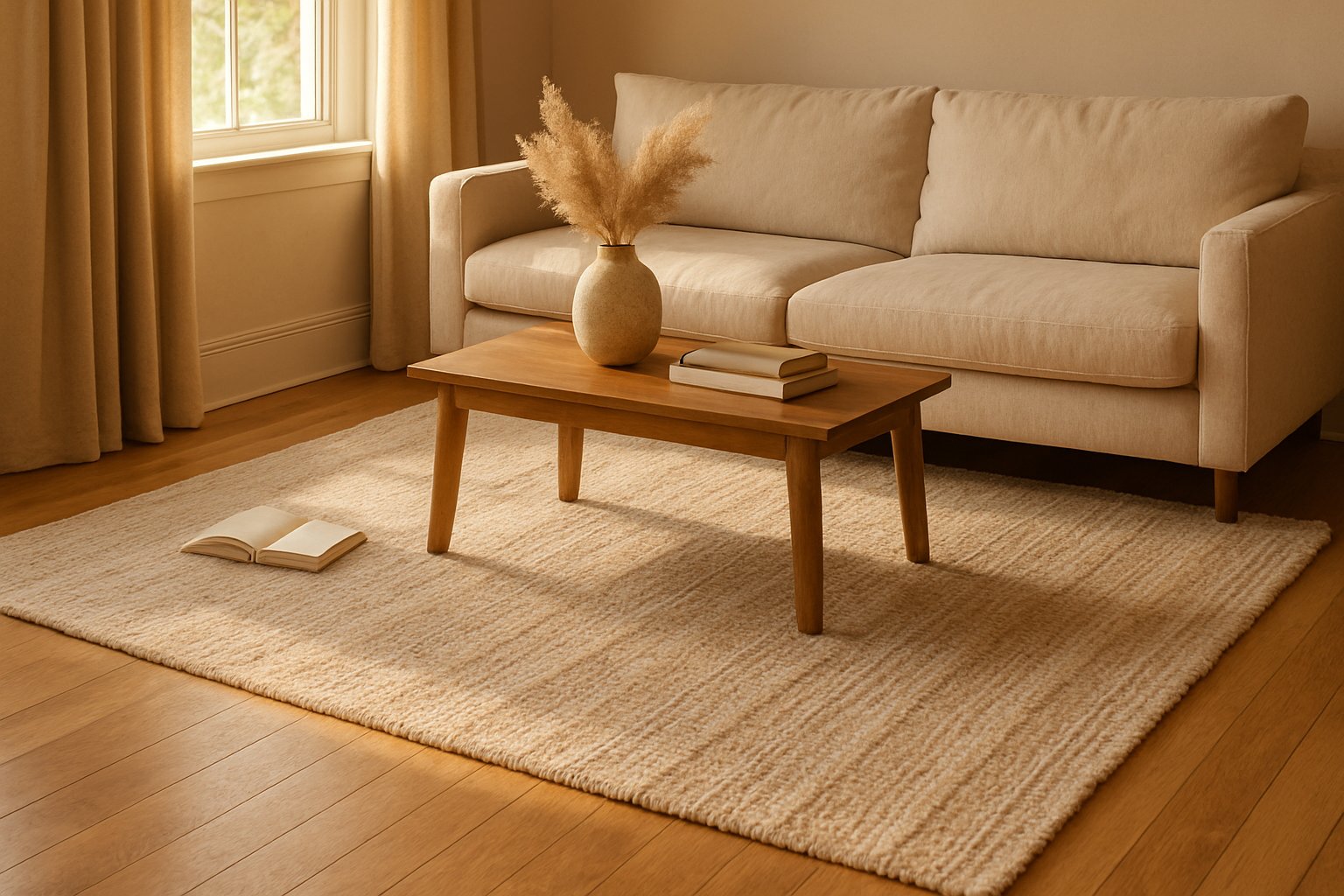
Living room with a natural wool area rug under a wooden coffee table and beige sofa with neutral pillows.

Rugs & Carpeting

Explore rugs made with natural fibers and thoughtfully chosen finishes for a healthier, more comfortable home.

How to Choose a Non-Toxic Area Rug

Rugs are one of the most overlooked sources of indoor air pollution — and one of the most impactful swaps you can make for a healthier home. Here’s what to know:

Why Polypropylene Rugs Are Problematic

Polypropylene is the most common rug fiber on the market and the most problematic from a toxicity standpoint. It is a petroleum-derived plastic that off-gasses VOCs — including acetaldehyde, toluene, and other compounds — particularly when new, and continues to off-gas at lower levels throughout its lifespan. Polypropylene rugs also shed microplastics with normal foot traffic, contributing to household microplastic load that is inhaled and ingested. The off-gassing is worst in the first weeks after purchase (the “new rug smell”), but the issue persists at lower levels long-term. Despite this, polypropylene dominates the rug market because it is inexpensive, durable, and easy to clean. Many “non-toxic” and “eco-friendly” rug brands still use polypropylene — it is not a safe or sustainable choice regardless of marketing claims.

Are Ruggable Rugs Non-Toxic?

Ruggable is one of the most common questions we receive, and the answer is no — Ruggable rugs are not non-toxic by our standards. Ruggable rug covers are made from polyester (a petroleum-derived synthetic fiber that sheds microplastics), and the rug pad underneath is made from polyurethane foam with a PVC gripper backing. The machine-washable convenience is genuine, but washing polyester textiles is actually one of the primary sources of microplastic pollution in wastewater, releasing hundreds of thousands of microfibers per wash cycle. Ruggable’s OEKO-TEX certification indicates testing for certain harmful substances but does not address off-gassing, microplastic shedding, or overall material sustainability. For families prioritizing a low-toxin home, Ruggable is not the right choice despite its mainstream popularity.

The Best Natural Rug Materials

Wool is our top recommendation for area rugs — it’s naturally stain-resistant (wool fiber has a natural lanolin coating that repels liquids), durable, flame-resistant without chemical treatment, and biodegradable. High-quality wool rugs from ethical sources last decades. Look for GOTS-certified wool or rugs that disclose their wool sourcing and dyeing process. Jute and sisal are excellent natural fiber options for lower-traffic areas — they are biodegradable, have minimal processing requirements, and produce essentially no VOC off-gassing. They are less comfortable underfoot and less durable in high-moisture environments. Cotton is a good option for washable flat-weave rugs, particularly in children’s rooms — choose GOTS-certified organic cotton to avoid pesticide residues and chemical finishing treatments. Hemp is an emerging rug material with excellent durability, natural antimicrobial properties, and minimal chemical processing requirements.

Rug Pads: The Hidden Toxin Source

Even a perfectly natural area rug can be undermined by a toxic rug pad. Most conventional rug pads are made from PVC (vinyl) or synthetic rubber compounds that off-gas plasticizers and VOCs — and because the pad is sandwiched between the rug and the floor, its off-gassing is trapped in the rug pile where it concentrates. Natural felt rug pads (from recycled wool or natural fiber felt) are the cleanest option. Natural rubber rug pads are also a good choice — true natural rubber (not synthetic rubber or rubber blended with PVC) has minimal off-gassing and excellent grip. Avoid any rug pad described as “memory foam,” “grip-tite,” or made from polyurethane foam, PVC, or vinyl.

How We Vet

We screen rugs and area rugs for: no polypropylene, nylon, or synthetic fiber content (these off-gas VOCs and shed microplastics with foot traffic); no synthetic latex backing — a major off-gassing source that is often the primary VOC contributor in otherwise natural-fiber rugs; no PVC or vinyl components; no chemical stain treatments or soil repellents (including PFAS-based treatments, which are common in “easy clean” rugs); no synthetic dyes without safety certification — we prefer GOTS-certified processing or natural dyes; no formaldehyde-based wrinkle or shape-retention treatments; and full material disclosure from the brand including fiber content, dye process, and backing material. We require either GOTS (Global Organic Textile Standard), OEKO-TEX Standard 100, or equivalent third-party certification, or direct material disclosure substantiated by the manufacturer. Ruggable and similar machine-washable synthetic rugs do not meet our standard despite their popularity.

Rugs & Carpeting FAQs

  • No — Ruggable rugs are not non-toxic by our standards, despite their widespread popularity. Ruggable rug covers are made from polyester, a petroleum-derived synthetic fiber that sheds microplastics with every use and every wash. The rug pad is made from polyurethane foam with a PVC gripper backing — both materials off-gas VOCs and contribute to indoor air quality issues. Ruggable holds an OEKO-TEX Standard 100 certification, which tests for certain harmful substances but does not address microplastic shedding, VOC off-gassing, or overall material sustainability. In fact, machine-washing polyester textiles is one of the primary pathways for microplastic pollution — each wash cycle releases hundreds of thousands of synthetic microfibers into wastewater. The machine-washable convenience is genuine and appealing, but the material tradeoffs are significant for families trying to reduce toxin exposure in the home. We do not carry Ruggable or comparable synthetic washable rug systems. The closest non-toxic alternative is a GOTS-certified organic cotton flat-weave rug, which can be machine-washed without microplastic concerns.

  • Yes — polypropylene rugs are a meaningful source of indoor air pollution and we do not recommend them. Polypropylene is a petroleum-derived plastic that off-gasses volatile organic compounds (VOCs) including acetaldehyde, toluene, and other compounds. The off-gassing is most intense when the rug is new — the “new rug smell” is VOC off-gassing — but continues at lower levels throughout the rug’s lifespan. Polypropylene also sheds microplastics with normal foot traffic, contributing to household microplastic load that is both inhaled and ingested. Children and pets who spend time on the floor are most heavily exposed. Beyond toxicity, polypropylene is a non-renewable petroleum product that is not biodegradable and difficult to recycle. Despite all of this, polypropylene dominates the area rug market because it is inexpensive, durable, and stain-resistant. Many rugs marketed as “eco-friendly” or even “non-toxic” still use polypropylene — always check the fiber content before purchasing. Natural fiber alternatives — wool, jute, sisal, organic cotton — are safer, more sustainable, and in the case of wool, genuinely competitive on durability.

  • Wool is our top recommendation for the healthiest area rug in most situations. Wool is a natural protein fiber that does not off-gas VOCs, naturally resists staining through its lanolin coating, is inherently flame-resistant without chemical treatment, and biodegrades at end of life. High-quality wool rugs from transparent sources last decades and improve in appearance with age. Look for GOTS-certified wool or brands that disclose their wool sourcing and dyeing practices — conventional wool dyeing can introduce synthetic chemicals even into otherwise natural products. For children’s rooms specifically, GOTS-certified organic wool or organic cotton flat-weave rugs are ideal — both off-gas nothing, can be certified free from harmful dye residues, and are safe for the close floor contact children have during play. Jute and sisal are excellent for lower-traffic areas where comfort is less critical — they are completely natural, minimally processed, and produce no off-gassing. Hemp is an emerging option with similar benefits and excellent durability. Whatever fiber you choose, the rug pad matters as much as the rug itself — pair any natural fiber rug with a natural felt or natural rubber pad, not PVC or polyurethane foam.

  • The rug pad is as important as the rug itself from a toxicity standpoint — and it’s the most overlooked part of a non-toxic rug setup. Most conventional rug pads are made from PVC (vinyl) or polyurethane foam, both of which off-gas VOCs and plasticizers. Because the pad sits sandwiched between the rug and the floor, its off-gassing can be trapped in the rug pile and concentrated in the breathing zone of anyone spending time on the floor. There are two safe options: natural felt pads, made from recycled wool or natural fiber felt, are the cleanest choice — they provide good cushioning, protect hardwood floors, and off-gas nothing; natural rubber pads (made from genuine tree rubber, not synthetic rubber or rubber blended with PVC) provide excellent grip with minimal off-gassing and are a good choice for thinner rugs that need more grip. Avoid any pad labeled “memory foam,” “grip-tite,” or manufactured from polyurethane, PVC, or vinyl. If you can’t find clear material disclosure on a rug pad, that’s a red flag — reputable natural rug pad brands are transparent about their materials. The investment in a quality natural pad is worthwhile: it extends the life of your rug and completes the non-toxic floor setup.

  • Yes — high-quality wool rugs are among the safest flooring options for babies and toddlers, and significantly safer than synthetic alternatives. Wool does not off-gas VOCs, is naturally hypoallergenic (despite the misconception that wool causes allergies — most wool sensitivity is to lanolin or coarse fiber, not a true allergy), is naturally flame-resistant without chemical treatment, and has natural antimicrobial properties. The key qualifications: choose GOTS-certified wool or rugs that disclose their dyeing process, as synthetic dyes are the primary chemical concern in otherwise natural wool rugs; choose a rug with a natural backing (wool felt, natural jute, or natural rubber) rather than synthetic latex or PVC; and pair it with a natural fiber or natural rubber rug pad. Avoid wool rugs treated with moth-proofing chemicals — some manufacturers apply permethrin or other pesticides to wool to resist moths, which undermines the safety profile. GOTS certification prohibits these treatments. If your child has a confirmed wool sensitivity, GOTS-certified organic cotton flat-weave rugs are the next best option — they are washable, off-gas nothing, and are completely safe for floor-level contact.

  • The most reliable indicators: full fiber content disclosure (not just “natural fibers” — the specific fiber and percentage should be listed); backing material disclosure (synthetic latex and PVC backings are common even on natural-fiber rugs); dye process transparency (natural dyes or GOTS-certified synthetic dyes that have been tested for harmful residues); and third-party certification. The most meaningful certifications for rugs are GOTS (Global Organic Textile Standard), which covers the entire supply chain from fiber to finished product including dyes and processing chemicals; OEKO-TEX Standard 100, which tests the finished product for harmful substances but doesn’t address VOC off-gassing or microplastic shedding; and GOLS (Global Organic Latex Standard) if the rug has a natural rubber component. Watch out for greenwashing signals: “eco-friendly” without specific material disclosure; “natural” rugs with synthetic backing materials; OEKO-TEX certification cited as evidence of complete safety (it’s a useful but limited standard); and brands that cannot tell you where their fibers come from or how they are processed. When in doubt, contact the brand directly and ask for fiber content, backing material, dye process, and any chemical treatments applied to the finished rug. A brand committed to non-toxic materials will answer these questions readily.