With research provided by Michael Hopkins, PhD
When I became a mother, I didn’t intend to use baby wipes at all. I assumed that in addition to exclusive cloth diaper usage, I’d be employing a washcloth and warm water at changing time.
Um, yeah. As soon as I experienced the convenience of the disposable wipe, wringing out poopy rags was a thing of the past. So I set out to find the best non-toxic baby wipes on the market.
It's important to find the cleanest baby wipe for several reasons:
- The frequency with which we use baby wipes--multiples times a day, every day, for years!
- Baby wipes are used on the most delicate area of a baby, and we don't wash the area off after use, so all ingredients are absorbed into baby's skin.
- Baby wipes represent a huge environmental burden, even forming a reef in the river Thames! We owe it to our planet to choose the most environmentally friendly wipe possible.
The good news is that the ingredients in baby wipes are definitely much better now than when I wrote the first version of this guide ten years ago. Back then, fragrance and parabens were in most brands of wipes. Those ingredients are now much less common. And more and more brands are moving away from plastic and toward plant-based materials. This is good news for babies and for the Earth!
Ingredients to Avoid in Organic Baby Wipes
If you are like me and have a hard time depriving yourself of the convenience of disposable baby wipes, you'll want to avoid wipes with the the following ingredients:
- "Fragrance” or “parfum,” since these almost always means pthlalates (which are known endocrine disruptors).
-
Phenoxyethanol, a suspected carcinogen. This is hard to avoid in "natural" wipes, so this ingredient alone won't land a brand in Sneaky Stuff in our rankings below. But we give extra points to the brands that skip this preservative.
-
PEG ingredients, which are petroleum-based compounds that are used as moisture-carriers and are known developmental toxins.
You'll notice that many natural baby wipes contain sodium benzoate as a preservative. This is a food-grade ingredient that I try to avoid in food, as it can create carcinogenic benzene when combined with vitamin C. However, all wet wipes do require a preservation system in order to prevent the growth of mold and bacteria, and I am not worried about a small amount of sodium benzoate. In our list of Best, Good, and Okay Stuff below, we will indicate which brands of non-toxic wipes include sodium benzoate in case some of you are trying to avoid it.
Changes to the 2026 Baby Wipes Guide
- Bamboo viscose is now considered only Okay Stuff due to toxic chemical solvents (like sodium hydroxide and carbon disulfide) used in its production
- Any wipes made of petro-plastic are now considered Bad Stuff.
- There have been some innovations in baby wipe technology that are Best Stuff, these include:
- Modal made from beechwood, which is a much less toxic process.
- Lyocell, which is made via a closed-loop, non-toxic solvents from wood pulp.
- VEOCEL™ Lyocell, which is a branded, compostable option for wipes with sustainable sourcing.
Why You Can Trust Gimme's Guides
Our team, which includes PhD scientists, has been obsessively researching and writing about safer, non-toxic products since 2010. Our vetting process draws on the latest peer-reviewed research and third-party testing, and we only recommend products that meet our strict standards. When we use affiliate links, it never influences which products we approve. How we vet products
The Bottom Line on Baby Wipes
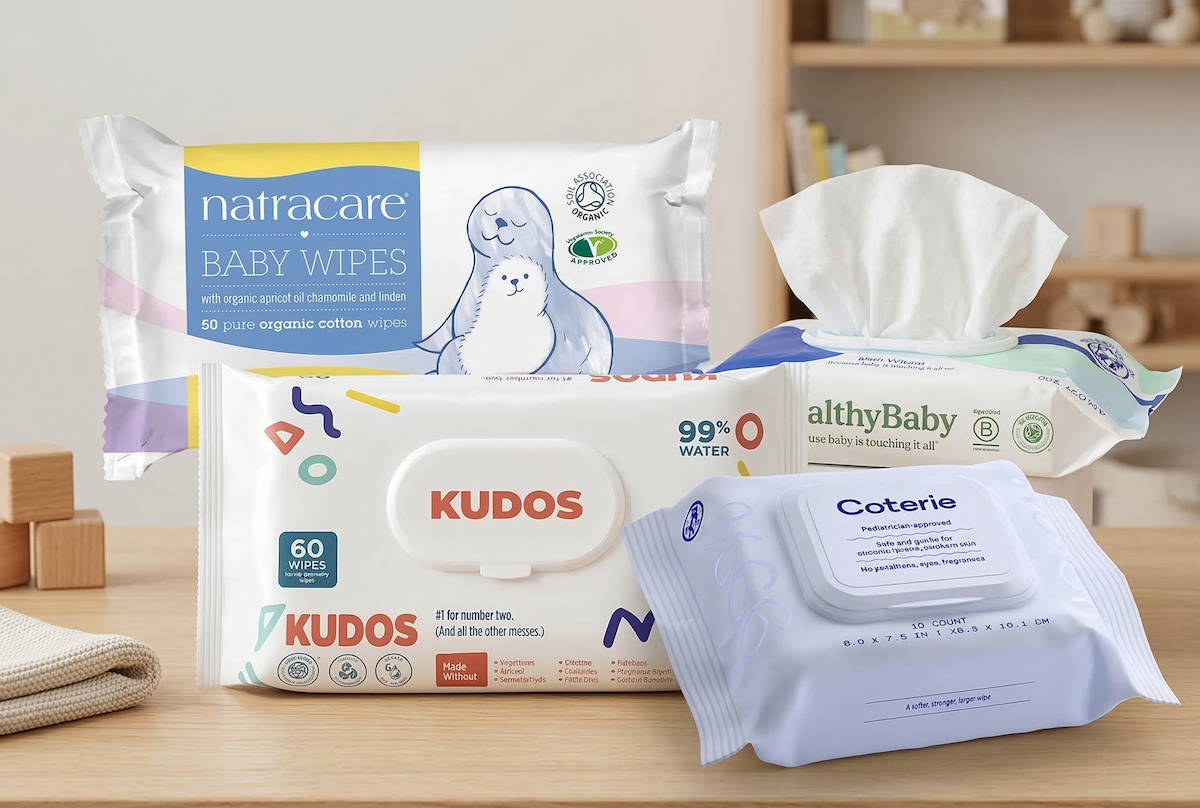
Our top picks: Healthybaby Wet Wipes (EWG Verified) and Natracare (Organic Cotton) lead our Best Stuff rankings.
In this guide, we look closely at what baby wipes are actually made of, and based on the materials and certifications, we rank brands:
-
Best Stuff: Plant-based materials, strong certifications, and the highest level of material transparency.
-
Good Stuff: Free of fragrance, dyes, and harsh preservatives — but typically made with bamboo viscose or more mixed materials.
-
Okay Stuff: Safer overall but still rely mostly on synthetic materials or lack full transparency.
-
Bad & Sneaky Stuff: Use fragrance or have poor disclosure, greenwashing claims, or limited information about materials and additives.
Best Non-Toxic Baby Wipes
Premium Quality
Coterie Baby Wipes
Luxuriously soft and effective
EWG VERIFIED
Healthybaby Wet Wipes
Third-party certified safe
Clean Ingredients
Kudos Baby Wipes
Only the safest materials
Organic Cotton
Natracare Baby Wipes
Gentle on sensitive skin
Sustainable Choice
Terra Wipes
Plant-based and eco-friendly
The Most Certified Non-Toxic Baby Wipes
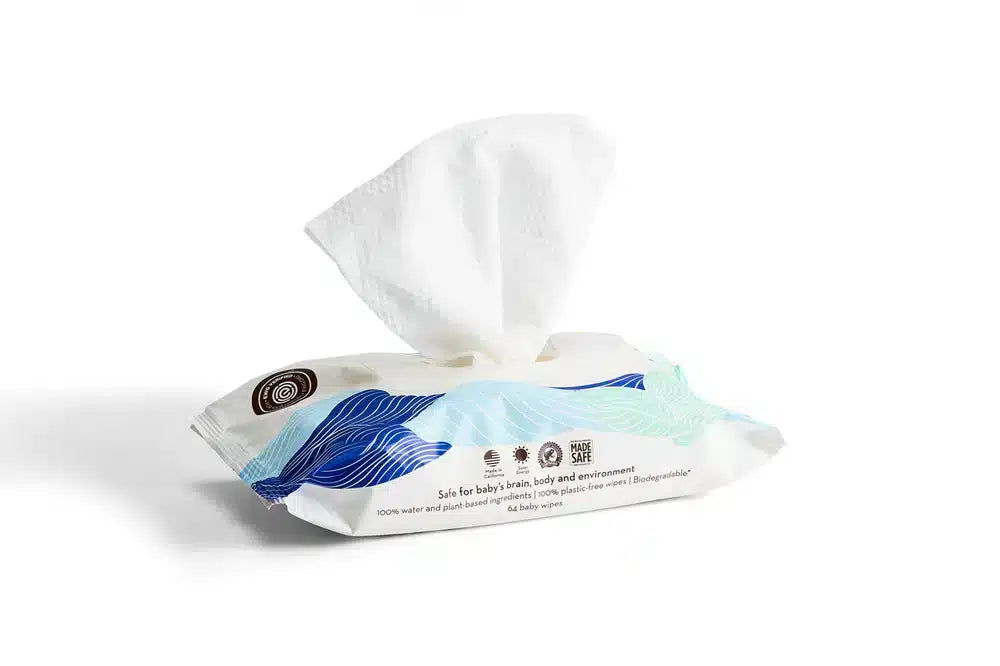
If you're looking for a brand of non-toxic baby wipes that has a lot of third-party verification of their safety, consider healthybaby. Not only are they a B Corp, but their wet wipes received EWG and MADE SAFE certifications, and the wood pulp they use in their wipes is verified by the Forest Stewardship Council. You'll read more about these wipes below, under the Best Stuff.
Ingredients You Won't See Listed on Baby Wipes
In addition to the ingredients you'll see listed on the side of a package of wipes, there are a number of other chemicals that may be included. These come in the form of contaminants and byproducts of the production process for some of the ingredients that go into the wipes. For example:
- Polysorbate-20, a common preservative, is often contaminated with carcinogenic 1,4-dioxane.
- 2-Bromo-2-Nitropropane-1,3-Diol (the preservative in the old Kirkland wipes, although they recently removed it) releases carcinogenic formaldehyde.
- Tocopheryl acetate (synthetic vitamin E that's used as a skin conditioner) is produced using hydroquinone, a skin toxicant and potential carcinogen.
The Material of the Wipe Itself
Most baby wipe labels don't even list what the wipes themselves are made of, but 90% of are made of petroleum-based plastic, such as polyester or polypropylene. I don't think either of these poses a risk to the baby on whom these wipes are used. However, because of the environmental toll these wipes post, we don't call any plastic wipes Best Stuff.
Which is the Best Plant-Based Material for Baby Wipes?
If you're avoiding plastic baby wipes, you'll find that there are several different kinds of plant-based materials manufacturers use instead. Of these, we think bamboo is the most eco-friendly choice. Bamboo grass grows quickly and it also breaks down faster. You may have heard that the way bamboo is processed can be toxic. It's true that bamboo must go through a chemical solvent process to become viscose, and we hope that in the future they'll be able to make bamboo into lyocel via a mechanical process. For now, we think bamboo viscose is the greenest material for a disposable wipe, but we also think that wood pulp and organic cotton are sufficiently sustainable materials.
Alternatives to Disposable Diaper Wipes
As we've established, there is no truly earth-friendly disposable diaper wipe. If you want to try for a more sustainable diaper-time cleanup, we love this organic cloth with this no-rinse foamer.
Best Stuff
Coterie Baby Wipes
- Made with 99% purified water and 1% skincare ingredients
- Contains vitamin E, glycerin, and food-grade preservatives
- Hypoallergenic and dermatologist tested
- Pediatrician approved
- Cruelty-free and free of 200+ chemicals
- Biodegradable, plant-based fibers
- Uses VEOCEL Lyocell derived from renewable wood sources
- EWG Certified
- Holds the National Eczema Association Seal of Acceptance
Cost per wipe: $0.14
Ingredients: Purified water, Tocopherol acetate (form of Vitamin E), Decyl glucoside (plant-derived surfactant), Glycerin (natural moisturizer), Sodium benzoate (food-grade preservative), Hydroxyacetophenone (skin conditioner), Citric acid (pH balance adjuster), Silicone quaternium-17, laureth-9 (skin conditioners)
Healthybaby Wet Wipes
- EWG-verified and non-toxic baby wipes
- Made from wood pulp
- Forest Stewardship Council (FSC) certified for responsibly sourced materials
- Preserved with sodium benzoate and citric acid
- All other ingredients are natural and safe
- Also Made Safe certified
- Healthybaby is a certified B Corp
- Thick, embossed texture for effective cleaning
- Just the right amount of moisture
- Excellent performance—one of the top favorites for wet wipes
Cost per wipe: $0.11
Use code GIMME15 for 15% off, including subscriptions.
(Healthybaby also makes an organic cotton dry wipe that you can use with just water, too.)
Ingredients: Purified Water, Aloe Barbadensis Leaf Juice†, Chamomilla Recutita (Matricaria) Extract, Lonicera Caprifolium (Honeysuckle) Flower Extract, Lonicera Japonica (Honeysuckle) Flower Extract, Glycerin (Vegetable-derived), Tocopherol (Vegetable-derived), Gluconic Acid (Plant-derived), Sodium Benzoate (Plant-derived), Citric Acid (Plant-derived) †Certified Organic Ingredient

Kudos Baby Wipes
- Made with 99% purified water
- 100% cellulosic fibers from sustainably managed trees
- Hypoallergenic and gentle for sensitive skin
- EWG (Environmental Working Group) verified
- Sustainable, compostable, and biodegradable
- Made with VEOCEL Lyocell fibers
- Extra thick with a raised pattern
- Performance grip for more efficient cleaning
Cost per wipe: $0.10
Ingredients: Water, Squalane, Glycerin, Pyrus Malus (Apple) Fruit Extract, Decyl Glucoside, Tocopherol, Levulinic Acid, Potassium Sorbate, Sodium Citrate
Natracare Baby Wipes
- EWG certified
- Non-toxic and contain no concerning ingredients
- Made with organic cotton
- Free of sodium benzoate
- One of the more expensive baby wipes reviewed
Cost per wipe: $0.16
Ingredients: Aqua, Brassica Campestris Seed Oil (Rapeseed), Glycerin, Lauryl Glucoside, Polyglyceryl-2-dipolyhydroxystearate, Prunus Armeniaca Kernel Oil (Apricot)*, Levulinic Acid, Parfum (Citrus Dulcis Extract (Orange), Amyris Balsamifera Bark Oil, Coriandrum Sativum Fruit Oil (Coriander), Juniperus Virginiana (Red Cedar), Citrus Bergamia Peel Oil Expressed (Bergamot Orange), Citrus Amara (Bitter Orange), Piper Nigrum Oil (Black Pepper)), Sodium Levulinate, Sodium Chloride, Chamomilla Recutita Flower Extract (Chamomile)*, Maltodextrin, Prunus Amygdalus Dulcis Oil (Sweet Almond)*, Tocopherol (Vitamin E), Helianthus Annuus Seed Oil (Sunflower), Potassium Sorbate, Glyceryl Oleate, Dicapryl Carbonate, Sodium Phytate, Limonene**, Linalool**
Terra Wipes
- Made of Oeko-Tex certified bamboo fiber (not viscose).
- Completely free of all plastic.
Cost per wipe: $0.17
Ingredients: 99.7% Pure New Zealand Purified Water, Hydrolyzed Soy Protein.
Good Stuff
Biom Baby Wipes
- Made with mostly purified water and a short list of skincare ingredients
- Fragrance-free and suitable for sensitive skin
- Includes soothing and moisturizing ingredients like aloe and glycerin
- Contains vitamin E for added skin support
- Plastic-free, plant-based wipe material
- Biodegradable fibers (no microplastics)
- Transparent ingredient list
- Designed with a refillable dispenser to reduce waste
Cost per wipe: $0.11–$0.16 (varies based on subscription)
Ingredients: Water. Sodium Benzoate, Caprylyl Glycol, Aloe Barbadensis Leaf Juice, Tocopheryl Acetate, Glycerin, Citric Acid, Polyglyceryl-4 Caprate
Dyper Baby Wipes
- From the makers of one of our favorite diaper brands (Dyper)
- Contain benzethonium chloride as a preservative (reason they are not labeled Best Stuff)
- Made of 100% bamboo viscose—the best disposable wipe material found
- Do not contain sodium benzoate
Cost per wipe: $0.08
Ingredients: Water (99%), Glycerin, Chamomilla Recutita Flower Extract, Tocopheryl Acetate, Aloe Barbadensis Extract, Decyl Glucoside, Benzethonium Chloride, Citric Acid.
Eco by Naty Wipes
- Non-toxic baby wipes
- Made from 100% plant-based fibers
- TÜV Austria “OK Compost” certified
- Preserved with sodium benzoate and potassium sorbate
Cost per wipe: $0.06
Ingredients: Aqua/water, Gluconolacton, Aloe Barbadensis Leaf Water, Chamomila Recutita Flower Water, Citric Acid, Propanediol, Caprylyl/Capryl Glucoside, Sodium Benzoate, Calcium Gluconate, Potassium Sorbate
Jackson Reece Kinder by Nature Biodegradable Wipes
- Made from wood pulp
- Short, clean ingredient list
- Available in scented (with essential oils) or unscented options
- Large and thick wipes
- Ideal level of moisture
- Preserved with potassium sorbate
Cost per wipe: $0.07
Ingredients: Aqua (purified and deionized water), Betaine (humectant derived from vegetable, to help moisturize the skin), Glycerin (vegetable based preservative carrier), Caprylyl/Capryl Glucoside (derived from vegetable, gentle cleansing agent to solubilize oils), Levulinic Acid (vegetable derived preservative), Potassium Sorbate (preservative), Sodium Levulinate (vegetable derived preservative), Chamomile Recutita Flower Extract (Chamomile derived from plant to help soothe skin), Aloe Barbadensis Leaf Juice (Aloe Vera derived from plant to moisturizer and cleanse skin), Sodium Citrate (pH adjuster derived from sugar beet).
Joonya Natural Baby Wipes
- Great for cleaning hands and faces
- Ideal level of wetness without any soapy suds
- Uses decyl glucoside as a gentle surfactant
- Preserved with silver hydrogen citrate (EWG score of 1)
- Free of sodium benzoate
- Made from 100% wood pulp
- FSC-certified material
Cost per wipe: $0.07
Ingredients: Purified Water, Organic Aloe Barbadensis (Aloe Vera) Leaf Juice Powder, Organic Chamomilla Recutita (Matricaria) Flower Extract, Silver Dihydrogen Citrate, Citric Acid, Decyl Glucoside, Organic Simmondsia Chinensis (Jojoba) Seed Oil, Sodium Citrate.
Kirkland Baby Wipes
- Contain phenoxyethanol as a preservative
- Better than many conventional brands
- Made of wood pulp instead of plastic
- Contain sodium benzoate
Cost per wipe: $0.04
Ingredients: Purified water, Coco Glucoside, Xanthan Gum, Glyceryl Oleate, Phenoxyethanol, Sodium Benzoate,
Tetrasodium Glutamate Diacetate, Citric Acid, Sodium Citrate
Nest Prebiotic Baby Wipes
- Made with 99% purified water and skin-supportive ingredients
- Fragrance-free and formulated without parabens, phthalates, alcohol, or phenoxyethanol
- Contains prebiotics to help support the skin microbiome
- pH-balanced to help protect baby’s skin barrier
- Made with soft, plant-based lyocell fibers
- Hypoallergenic and gentle for sensitive skin
- Plastic-free wipe material
- Full ingredient transparency
Cost per wipe: $0.12
Ingredients: Aqua, Glycerin, Propanediol, Aloe Barbadensis Leaf Juice, Inulin, Alpha-Glucan Oligosaccharide, Polyglyceryl-4 Caprate, Gluconolactone, Sodium Benzoate, Sodium Levulinate, Sodium Anisate, Sodium Gluconate, Hydroxyacetophenone, Citric Acid, Sodium Citrate
Pipette Baby Wipes
- EWG-verified baby wipes
- Free of sodium benzoate
- Very clean ingredient list
- Made of 100% plant-based materials
- Not personally tested (inviting feedback from users)
Discount code: THEGOODSTUFF
Cost per wipe: $0.07
Ingredients: Water, Glycerin, Squalane, Sorbitan Oleate Decylglucoside Crosspolymer, Sorbitan Caprylate,, Potassium Sorbate, Citric Acid
Okay Stuff
Attitude Baby Wipes
- Made of “chlorine-free cellulose,” a plant-based biodegradable fiber
- Clean, unconcerning ingredient list
- Contain sodium benzoate
Cost per wipe: $0.18
Ingredients: Water (solvent), Glycerin (humectant), Citric acid (pH adjuster), Sodium benzoate (natural preservative), Potassium sorbate (natural preservative), Sodium citrate (chelating agent), Sodium cocoamphoacetate (surfactant), Avena sativa (oat) kernel flour (soothing agent), Chamomilla recutita (matricaria) flower extract (soothing agent).
BabyGanics Face, Hand, and Baby Wipes
- BabyGanics is often categorized as “Sneaky Stuff”
- Wipes formula is relatively clean overall
- Sodium benzoate is the only questionable ingredient, but not highly concerning
- Made of plastic (polyester), which is harmful to the environment
- Use of plastic is especially disappointing from a brand with “ganic” in the name
- Overall performance is decent but environmentally unfriendly, making these “Sneaky”
Cost per wipe: $0.05
Ingredients: purified water, glyceryl oleate citrate, caprylic/capric triglyceride, decyl glucoside, olea europaea (olive) oil†, persea gratissima (avocado) oil, chamomile recutita (matricaria) lower extract†, calendula oicinalis lower extract†, aloe barbadensis extract†, solanum lycopersicum (tomato) seed oil, helianthus annuus (sunlower) seed oil†, vaccinium macrocarpon (cranberry) seed oil, nigella sativa (black cumin) seed oil†, rubus idaeus (raspberry) seed oil, citric acid, sodium benzoate, potassium sorbate Soft wipe material: polyester, viscose †Certified Organic Ingredient

Caboo Bamboo Baby Wipes
- Made from bamboo for a softer, sturdier wipe
- Unscented and 99%+ naturally derived
- No plastic or tree fibers
- MADE SAFE certified
- Better for baby and the planet
- Contain sodium benzoate
Cost per wipe: $0.11
Ingredients: Organic Bamboo Spunlace, Purified Water, Aloe Barbadensis Leaf Extract, Chamomilla Recutita Flower Extract, Glycerin, Polysorbate 20, Citric Acid, Lonicera Japonica Flower Extract, Lithospermum Erythrorhizon Root Extract, Caprylyl Glycol, Phenoxyethanol, Potassium Sorbate, Vitamin E, Aloe Fragrance.
Dapple All Purpose Wipes
- Contain phenoxyethanol
- Also contain sodium benzoate
- Does not qualify as Good Stuff
Cost per wipe: $0.18
Ingredients: Water, glycerin (emollient derived from vegetables), decyl glucoside (mild cleaner derived from sugar), malic acid (pH adjuster derived from apples), potassium sorbate, gluconolactone, and sodium benzoate (preservative).
Hello Bello Wipes
- Made of plant fibers
- Very clean ingredient list
- Preserved with sodium benzoate
- Non-toxic formula
- Produced in the USA
Cost per wipe: $0.03
Ingredients: Water (Aqua), Gluconolactone, Sodium Benzoate, Hydroxyacetophenone, Aloe Vera Extract (Organic), Chamomile Extract (Organic), Decyl Glucoside, Polyaminopropyl Biguanide, Ethylhexylglycerin.
Honest Clean Conscious Wipes
- Honest has both Good Stuff and not-so-clean products
- The wipe ingredients themselves qualify as Good Stuff
- Made of plant-based fibers
- Specific plant sources not disclosed, so biodegradability is uncertain
- A 2019 study found formaldehyde contamination in one batch (may have been isolated)
- Due to uncertainty, these wipes are rated as “Okay Stuff” instead of Best Stuff
Cost per wipe: $0.07
Ingredients: Water (Aqua/Eau), Trisodium Ethylenediamine Disuccinate, Sodium Benzoate, Sorbitan Oleate Decylglucoside Crosspolymer, Caprylyl Glycol, Ethylhexylglycerin, Citric Acid
up&up Baby Fresh & Clean Baby Wipes
- Made of plant-based fibers
- Contain synthetic fragrance (concern for the scented version)
- Update: Fragrance-free version is acceptable
- Overall rating depends on the version used
Cost per wipe: $0.05
Ingredients: Water, Sodium Benzoate, Gluconic Acid, Tetrasodium Glutamate Diacetate, Coco Glucoside, Sodium Citrate, Aloe Barbadensis Leaf Extract, Glycerin, Citric Acid.' '
WaterWipes
- Marketed as biodegradable
- Will biodegrade within 12 weeks under the right conditions (not guaranteed in typical disposal environments)
- Made from unspecified “bio-based” materials
- Contain trace amounts of benzalkonium chloride (a highly toxic preservative)
- Amount is low enough to still rate these as “Okay Stuff”
- Found to contain formaldehyde in a 2019 study
- Overall: Biodegradable claims are conditional, ingredients raise some concerns
Cost per wipe: $0.07
Ingredients: Water (Aqua) 99.9%, Citrus Grandis (grapefruit) seed extract**Contains trace of Benzalkonium Chloride
Bad Stuff
Huggies Wipes
- Huggies wipes are among the worst options
- Even the unscented version contains multiple questionable ingredients
- Include parabens
- Contain DMDM hydantoin, a known human immune system toxicant
- “Natural-sounding” varieties (like Cucumber or Green Tea) are still problematic
- Strong scent can be unpleasant
- Overall: Not recommended due to toxic ingredients and misleading marketing
Lanisoh Clean & Condition Baby Wipes
- Made of rayon and polyester (plastic-based fibers)
- Contain multiple problematic ingredients, including:
- PEG chemicals
- Phenoxyethanol
- Benzalkonium chloride
- Overall: Synthetic materials and harsh ingredients make these a poor choice
Pampers Wipes
- Pampers does not make any truly safe baby wipes
- Some varieties score moderate hazard on Skin Deep, but most are high hazard
- Common problematic ingredients include:
- Synthetic fragrance
- PEG chemicals
- Benzyl alcohol
- Even the “Sensitive” version contains multiple PEG chemicals
- Wipes are made from a plastic blend
- Overall: All Pampers wipes should be avoided due to toxic ingredients and plastic materials
Rite Aid Tugaboos Fragrance Free Wipes
- Contain synthetic fragrance
- Include propylene glycol
- Contain 2-bromo-2-nitropropane-1,3-diol (formaldehyde releaser)
- Contain DMDM hydantoin (another formaldehyde-releasing preservative)
- Overall: Multiple harsh and potentially toxic ingredients
Sneaky Stuff
365 Wipes
- Ingredients are generally low risk for babies
- Do contain benzoic acid (not ideal)
- Wipes are made of polypropylene (plastic)
- Any wipe marketed as “eco” but made of plastic is considered Sneaky Stuff
- Overall: Ingredients are okay, but the plastic material makes these misleading and not truly eco-friendly
Aleva Naturals Bamboo Baby Wipes
- Made of bamboo and claimed to biodegrade within 21 days
- Initially appears eco-friendly
- However, the ingredients are problematic and include:
- Cocamidopropyl betaine (can be irritating/allergenic)
- Didecyldimonium chloride (toxic disinfectant/quaternary ammonium compound)
- PEG chemicals
- The “Sensitive” version is not any better
- Overall: Eco-friendly material does not outweigh the harsh ingredients
Burt’s Bees Baby Wipes
- Ingredients list is relatively clean
- Contain phenoxyethanol, which disqualifies them from Good Stuff
- Made of plant-based material
- Not biodegradable despite plant-based fibers
- Overall: Decent formula, but preservative choice and lack of biodegradability are drawbacks
Eco Pea Baby Wipes
- Non-toxic and EWG-verified
- Made of biodegradable bamboo
- Preserved with sodium benzoate
- All other ingredients are very clean
- Not yet personally tested for performance
Huggies Natural Care Baby Wipes
- Huggies has removed parabens and methylisothiazolinone (a positive change driven by consumers)
- Still contains fragrance
- Includes PEG chemicals
- Therefore remains in the Sneaky Stuff category
- Made mostly of plastic fibers
- Overall: Some improvements, but still not a clean or eco-friendly option
Mama Bear Baby Wipes
- Previously considered Okay Stuff
- Recently moved to the Sneaky Stuff category by Gimme the Good Stuff
- Contain phenoxyethanol
- Also contain sodium benzoate
- Despite being popular, the preservatives make them less clean than they appear
- Overall: No longer recommended as a clean option
Mustela Baby Cleansing Wipes
- Brand is EWG-verified, which is confusing given the ingredients and materials
- Some versions contain full synthetic fragrance
- Even the unscented version is made mostly of polyester (plastic)
- Using plastic for disposable wipes is unnecessary with so many plant-based alternatives available
- Overall: EWG verification feels misleading due to material choice and fragrance in some versions
Parasol Wipes
- Parasol wipes were found to contain formaldehyde in a past study (batch-specific, current status unknown)
- Ingredient list is otherwise very clean
- Wipes are plastic-based
- In 2022, there is no reason to use plastic when plant-based options exist
- Overall: Clean formula doesn’t outweigh the environmental concern of plastic wipes
Pura Baby Wipes for Sensitive Skin
- Made from biodegradable plant fibers
- Sourced from FSC-certified sustainable materials
- 100% plastic-free
- Preserved with sodium benzoate and potassium sorbate
- Overall: Clean, sustainable material but does include common preservatives
Thrive Market Baby Wipes
- Made of plastic fibers
- Contain benzyl alcohol
- Overall: Not a clean or eco-friendly option






171 comments
Sara
Hello Bello also has a new formulation – I wonder how they rank now?? They smell terrible
Stefanie
Hi! Wondering if you could update the info on the kudos wipes? I see that they have a new formulation!
Trina
Have you looked at Freestyle’s wipes? Their diapers are supposedly pretty clean so wondering about their wipes! Thank you!!
chayareisner1
Hi, just wondering if you would recommend kudos water wipes since the diapers are good? Or is healthy baby water wipes a better option?
Laura P.
Agreed. I love Coterie wipes and surprised not to see them here either. Would love to know!