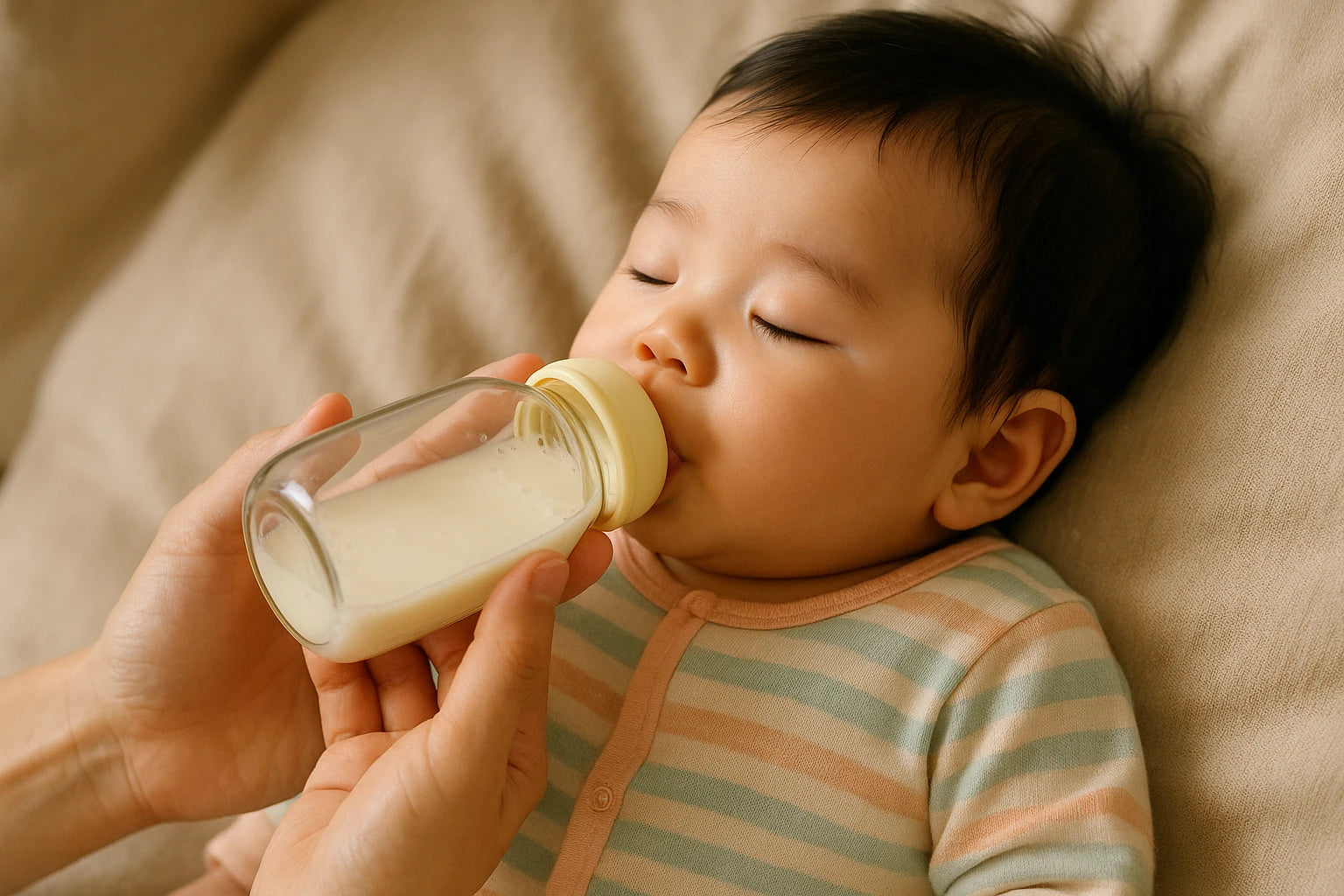
Parent feeding a baby with a yellow-tipped bottle while holding them in their arms.

Baby Bottles & Sippy Cups

Shop safer baby bottles, sippy cups, nipples, and feeding accessories, researched for materials, durability, and overall safety.

How to Choose the Safest Baby Bottles

1. Why Plastic Baby Bottles Are a Problem

Plastic baby bottles — including BPA-free options — can leach chemical plasticizers into milk and formula, particularly when heated. BPA was widely used in polycarbonate bottles until consumer pressure led to its removal, but replacement chemicals like BPS and BPF have similar estrogenic activity in early research. Microplastics are another concern: a 2020 study in Nature Food found that plastic baby bottles release millions of microplastic particles per liter during formula preparation. For an infant consuming multiple bottles per day, the cumulative exposure is significant.

2. Glass vs. Stainless Steel Baby Bottles

Both glass and stainless steel are excellent, non-leaching choices. Glass (specifically borosilicate glass) is chemically inert, easy to clean, and lets you see the fill level — but it’s heavier and can break if dropped. Many glass bottles come with protective silicone sleeves. Stainless steel is lighter, virtually unbreakable, and excellent for on-the-go use — the tradeoff is that you can’t see the fill level. For home use with newborns, glass is often preferred. For toddlers and travel, stainless steel is more practical. Both are far safer than any plastic option.

3. What About Anti-Colic Bottles?

Many anti-colic bottles use complex venting systems with multiple small plastic parts — which can be harder to clean thoroughly and may add more plastic contact surfaces. If colic or gas is a concern, look for glass or stainless bottles with vented silicone nipples that minimize air intake without adding plastic components. Paced bottle feeding technique also significantly reduces gas and supports breastfeeding continuation.

Read our full Best Non-Toxic Baby Bottles Guide for brand-by-brand ratings, our top picks by feeding style, and guidance on transitioning to sippy cups.

How We Vet

We look for bottles made from borosilicate glass, food-grade stainless steel (18/8 or 304), or 100% food-grade silicone. We avoid all plastics, including BPA-free options (which may contain BPS, BPF, or other bisphenol analogs), bottles with undisclosed coatings or liners, and any product without clear material disclosure. Nipple material matters too — we prefer natural rubber or food-grade silicone nipples over latex or plasticized rubber.

Baby Bottles FAQs

  • The safest baby bottles are made from borosilicate glass, food-grade stainless steel, or 100% food-grade silicone. These materials are chemically inert and don’t leach plasticizers, hormone disruptors, or microplastics into milk or formula. Glass is the gold standard for home use — it’s easy to clean, non-porous, and transparent. Stainless steel is ideal for travel and older babies. Silicone bottles are lightweight and flexible, great for younger infants. All three are significantly safer than any plastic bottle, including those labeled BPA-free.

  • Yes — food-grade stainless steel (18/8 or 304 grade) is one of the safest materials for baby bottles. It’s non-porous, doesn’t leach chemicals, doesn’t harbor bacteria, and is highly durable. The key thing to verify is that the interior has no plastic liner or coating — some stainless bottles have a plastic inner lining that defeats the purpose. Look for bottles that explicitly state the interior is uncoated, food-grade stainless steel throughout. Stainless steel is not suitable for microwave use, but is safe for warming in warm water. It’s an excellent choice for on-the-go feeding and for older babies and toddlers.

  • For breastfed babies, the most important features are a slow-flow nipple that mimics the pacing of breastfeeding and a wide, breast-shaped nipple base that encourages a deep latch. This helps prevent nipple confusion and supports continued breastfeeding. Glass bottles with natural rubber or food-grade silicone nipples are the safest material combination. Paced bottle feeding technique — holding the bottle horizontally and allowing the baby to control the flow — is equally important and works with any bottle. Avoid fast-flow nipples, which can cause babies to prefer the bottle over the breast due to less effort required.

  • Both are excellent, non-toxic choices — the best option depends on your situation. Glass is chemically inert, easy to sterilize, lets you see the fill level, and is the most widely recommended for home use with newborns. The main drawback is weight and breakability, though silicone sleeves reduce the drop risk significantly. Stainless steel is virtually unbreakable, lighter for travel, and keeps milk at temperature longer — but you can’t see the fill level, and it’s harder to verify there’s no internal plastic lining (always confirm the interior is uncoated stainless). Many families use glass at home and stainless steel on the go.

  • BPA-free does not mean chemical-free. When BPA was removed from baby bottles under regulatory pressure, manufacturers replaced it with structurally similar chemicals — BPS, BPF, and other bisphenol analogs — that early research suggests have similar hormone-disrupting properties. A 2020 study in Nature Food also found that plastic baby bottles release millions of microplastic particles per liter during normal formula preparation with hot water. For infants drinking multiple bottles per day, this cumulative exposure is significant. The only truly safe baby bottles are those made from glass, stainless steel, or food-grade silicone — not any form of plastic.