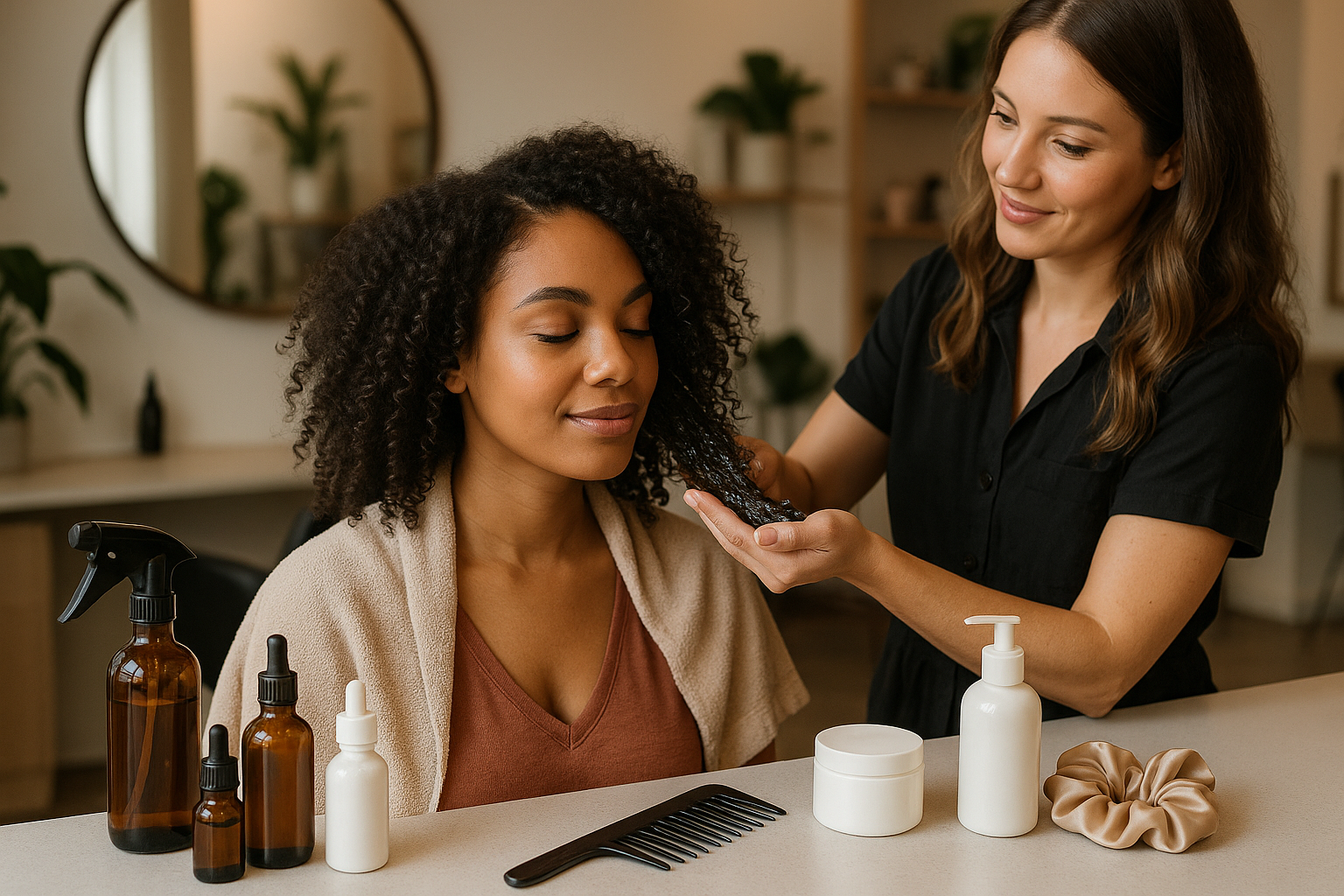
Hair Styling & Treatment

Hair Styling & Treatment

Most hair styling products are loaded with synthetic fragrance, silicones, and preservatives that coat the hair shaft and irritate the scalp over time. Everything here is screened for harsh chemicals — so you can style and treat your hair without the toxic trade-off.

How to Choose Clean Hair Styling & Treatment Products

1. The Problem with Silicones

Silicones are in the majority of conventional conditioners, serums, and styling products. They create a smooth, shiny appearance by coating the hair shaft — but over time they build up, weigh hair down, and block moisture from penetrating. They also rinse into waterways and don’t biodegrade. Clean alternatives use plant-based oils (argan, jojoba, marula) and butters that provide real moisture and slip without buildup.

2. Synthetic Fragrance in Hair Products

Hair products sit on your scalp — skin that absorbs chemicals more readily than most areas of the body. Synthetic fragrance is one of the most common sensitizers and can contain hundreds of undisclosed chemical compounds, including phthalates (hormone disruptors used as fragrance carriers). Fragrance-free or naturally-scented products using essential oils are the safer choice, especially for anyone with a sensitive scalp or scalp conditions.

3. Heat Protectants: What to Look For

Most conventional heat protectants rely on silicones to coat the hair and deflect heat — effective, but with the buildup downsides mentioned above. Clean heat protectants use heat-stable plant oils and proteins (like hydrolyzed wheat or quinoa protein) that strengthen the hair structure rather than just coating it. Look for products that are silicone-free and free from synthetic fragrance, and that disclose their heat protection temperature range.

For our full breakdown of ingredients to avoid in shampoo and hair care, read our Non-Toxic Shampoo Guide.

We avoid synthetic fragrance, silicones (ingredients ending in -cone or -siloxane), parabens, phthalates, PEGs, formaldehyde-releasing preservatives, and artificial dyes. We look for products with clean, functional ingredient lists that deliver results through botanical actives and plant-based ingredients rather than synthetic film-formers and coating agents.

Hair Styling & Treatment FAQs

  • The main ones to avoid: synthetic fragrance (can contain hundreds of undisclosed chemicals including phthalates), silicones like dimethicone and cyclomethicone (build up on the hair shaft and block moisture), parabens (hormone-disrupting preservatives), PEGs (penetration enhancers that may be contaminated with carcinogens), formaldehyde-releasing preservatives like DMDM hydantoin and quaternium-15, and artificial dyes. For styling products specifically, also watch for polyquaternium compounds and acrylates — synthetic film-formers that create hold but build up over time.

  • Silicones aren’t acutely toxic, but they create real problems over time. They coat the hair shaft rather than moisturizing it, which means the hair looks smooth and shiny initially but becomes increasingly dependent on the silicone to appear healthy. They build up with repeated use, making hair feel heavy and dull, and they block water and other nourishing ingredients from penetrating. Many silicones are also not water-soluble, meaning they require harsh sulfate shampoos to remove — a cycle that strips natural oils and damages hair. Plant oils like argan, jojoba, and marula provide similar slip and shine without any of these downsides.

  • Yes — most conventional hair gels rely on synthetic polymers like carbomers and polyquaternium compounds for hold, along with synthetic fragrance and preservatives. Clean alternatives use natural hold agents like flaxseed gel, aloe vera, and plant-based waxes. Flaxseed gel in particular is excellent for men who want a natural, flexible hold — it’s been used for decades in the curly hair community and works just as well for straight hair styles. Look for gels with short ingredient lists, no synthetic fragrance, and plant-derived hold agents.

  • Yes — more so than in many other products. Hair products are applied directly to the scalp, which is highly absorbent, and leave-in products like serums, creams, and heat protectants stay on the skin all day. Synthetic fragrance is a catch-all term that can represent a mixture of hundreds of chemicals, none of which need to be individually disclosed. Phthalates — commonly used as fragrance carriers and linked to hormone disruption — are frequently found in fragranced hair products. For anyone with scalp sensitivity, eczema, or hormone concerns, switching to fragrance-free or naturally-scented products is one of the highest-impact changes you can make.

  • Start with one or two clarifying washes using a sulfate-based or apple cider vinegar rinse to strip the silicone buildup — this is one of the few times a sulfate shampoo is actually useful. After that, switch to a silicone-free shampoo and conditioner and give your hair 2–4 weeks to adjust. During the transition, hair may feel drier or look less shiny than it did with silicones — that’s normal. Your scalp’s natural oil production will recalibrate, and within a few weeks most people find their hair feels healthier and more balanced without the synthetic coating.

Popular Blog posts

View all