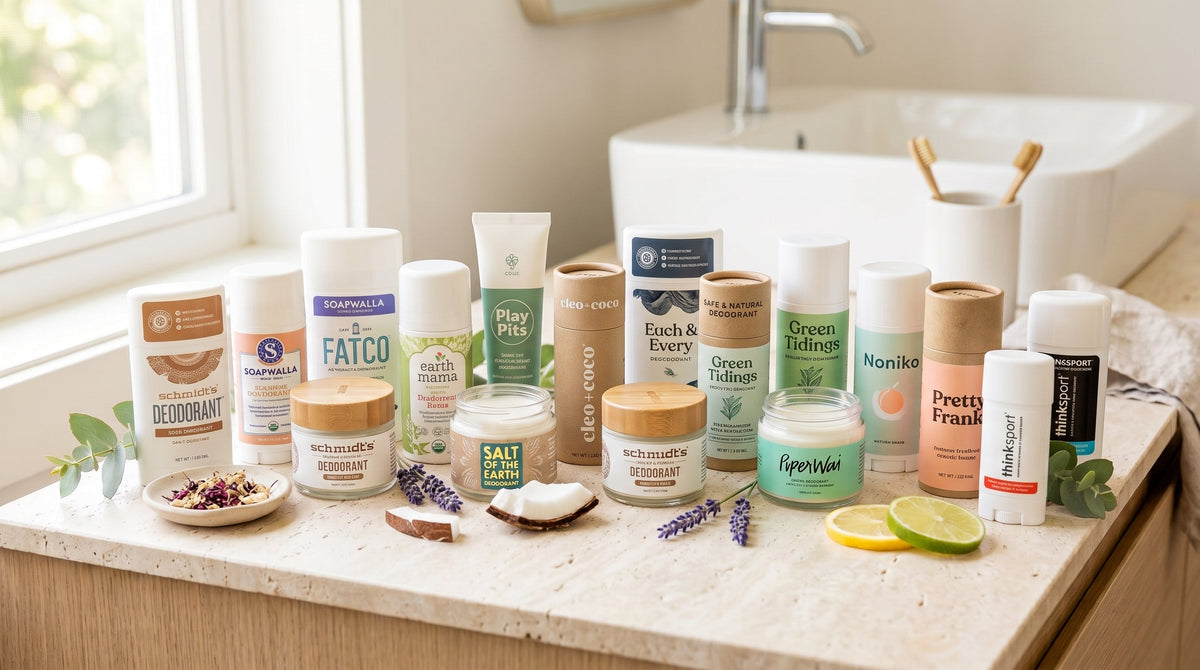
A collection of non-toxic and eco friendly air freshener options.

Air Fresheners

Most conventional air fresheners — including popular brands like Febreze — contain synthetic fragrance, phthalates, VOCs, and aerosol propellants that are dispersed directly into the air you breathe. They don’t eliminate odors; they mask them with chemicals. Everything here is chosen for genuinely safe, effective odor elimination that keeps your home smelling clean without compromising your indoor air quality.

How to Choose a Safe, Non-Toxic Air Freshener

1. Why Most Air Fresheners Are a Problem

Air fresheners are among the most chemically problematic household products because they disperse chemicals directly into the air — and you inhale them continuously. Synthetic fragrance (found in virtually all conventional air fresheners) is a complex mixture of dozens to hundreds of chemicals, many of which are VOCs that contribute to indoor air pollution. Phthalates, used to make fragrance last longer, are endocrine disruptors found in measurable levels in homes that regularly use air fresheners. Aerosol sprays add propellants and fine particles to the mix. The EPA has found that indoor air can be 2–5 times more polluted than outdoor air — and air fresheners are a significant contributor.

2. What Actually Works Instead

The most effective non-toxic odor solutions work by neutralizing or absorbing odors rather than masking them. Activated charcoal bags (like Moso Natural) absorb moisture and odor molecules from the air. Beeswax or soy candles with pure essential oils add fragrance without synthetic chemicals. Essential oil diffusers provide scent with fully disclosed, natural ingredients. Baking soda-based deodorizers neutralize acidic odor molecules. Simply opening windows and improving ventilation addresses the root cause better than any spray.

3. Are Essential Oil-Based Air Fresheners Truly Safe?

Essential oils are naturally derived and far safer than synthetic fragrance, but they’re not without considerations. Some essential oils are irritating to pets (citrus oils and tea tree oil in particular can be toxic to cats), and high concentrations can trigger reactions in people with asthma or severe fragrance sensitivities. For the most sensitive households, unscented odor absorbers are the safest choice. For everyone else, essential oil-based products are a significant upgrade over synthetic fragrance.

Read our full Non-Toxic Air Freshener Guide for brand-by-brand ratings and our top picks by category.

We avoid synthetic fragrance, phthalates, VOCs (volatile organic compounds), aerosol propellants, formaldehyde-releasing agents, and benzene-containing ingredients. We look for products that actually neutralize odors rather than masking them, with fully disclosed natural ingredients — essential oils, activated charcoal, baking soda, and plant-derived odor absorbers. Safe for use around children, pets, and people with fragrance sensitivities.

Air Fresheners FAQ

  • Most conventional air fresheners pose health concerns due to synthetic fragrance, phthalates, and volatile organic compounds (VOCs). Aerosol sprays are among the worst — they combine synthetic fragrance chemicals with propellants that penetrate deep into the lungs. Plug-in air fresheners continuously off-gas VOCs and phthalates into your home’s air. Gel air fresheners and car fresheners similarly release a steady stream of synthetic chemicals. Studies have linked regular air freshener use to elevated rates of headaches, respiratory irritation, and in long-term exposure studies, more serious health effects. Brands that rely entirely on synthetic fragrance without disclosure — which includes most major supermarket brands — are the highest concern.

  • Febreze contains synthetic fragrance, which is a complex mixture of undisclosed chemicals including phthalates — hormone disruptors that are particularly concerning for young children and pets. While Procter & Gamble markets Febreze as safe, they don’t fully disclose all fragrance ingredients, making independent safety assessment difficult. Pets are especially vulnerable because they spend more time on treated surfaces (carpets, furniture) and groom themselves, increasing ingestion exposure. Cats in particular have limited ability to metabolize many synthetic chemicals. For households with babies, young children, or pets, we recommend switching to activated charcoal, baking soda-based, or essential oil alternatives with fully disclosed ingredients.

  • Mrs. Meyer's markets itself as a natural cleaning brand, but their products contain synthetic fragrance — which is the primary concern. While they use some plant-derived ingredients and are free from certain harmful chemicals, the undisclosed fragrance mixture means phthalates and other fragrance chemicals may be present. Mrs. Meyer's scores better than conventional brands like Febreze but doesn’t meet the standard of fully transparent, fragrance-free or naturally-scented products. For people with fragrance sensitivities, babies, or anyone wanting the cleanest option, there are safer alternatives.

  • Plug-in air fresheners are among the most concerning air freshener formats because they continuously off-gas synthetic fragrance chemicals, phthalates, and VOCs into your home’s air 24 hours a day. Unlike a spray you use occasionally, a plug-in provides constant, low-level chemical exposure in whatever room it’s placed. Studies have found elevated levels of VOCs and phthalates in homes that use plug-in fresheners regularly. They’re also typically placed near the floor — where children and pets spend the most time and where concentration is highest. Non-toxic alternatives like essential oil diffusers used intermittently, or passive activated charcoal odor absorbers, provide fragrance or odor control without the continuous chemical exposure.

  • For nurseries and kids’ rooms, the safest options are those that neutralize odors without adding any fragrance at all. Activated charcoal bags (like Moso Natural) are the top recommendation — they absorb odor and moisture passively with zero chemical off-gassing. Baking soda-based deodorizers work similarly. If you want some scent, a diffuser used briefly with baby-safe essential oils (lavender, chamomile) in a well-ventilated room is a reasonable option — but keep diffusion time short and never diffuse in a closed room with an infant. Avoid all synthetic fragrance, aerosols, plug-ins, and any product that doesn’t fully disclose its ingredients in a baby’s or young child’s space.

  • Yes — but it helps to understand what “working” means. Conventional air fresheners don’t actually remove odors; they mask them with stronger synthetic fragrance or use chemical compounds that interfere with your ability to smell. Natural alternatives that genuinely neutralize odors — activated charcoal, baking soda, zeolite — actually work better at eliminating odors rather than covering them up. Essential oil sprays and diffusers provide real fragrance from natural sources. The adjustment period when switching is real: your nose has been trained to associate synthetic fragrance with “clean,” and natural scents may smell more subtle at first. Within a few weeks, most people find natural alternatives more than sufficient — and many prefer them.